Cincinnati, OH · Garage Door Service
New garage door installation for Cincinnati's 1960s-70s housing stock, sized right for original openings and built for the region's cold winters. Free-form estimate, honest scope.
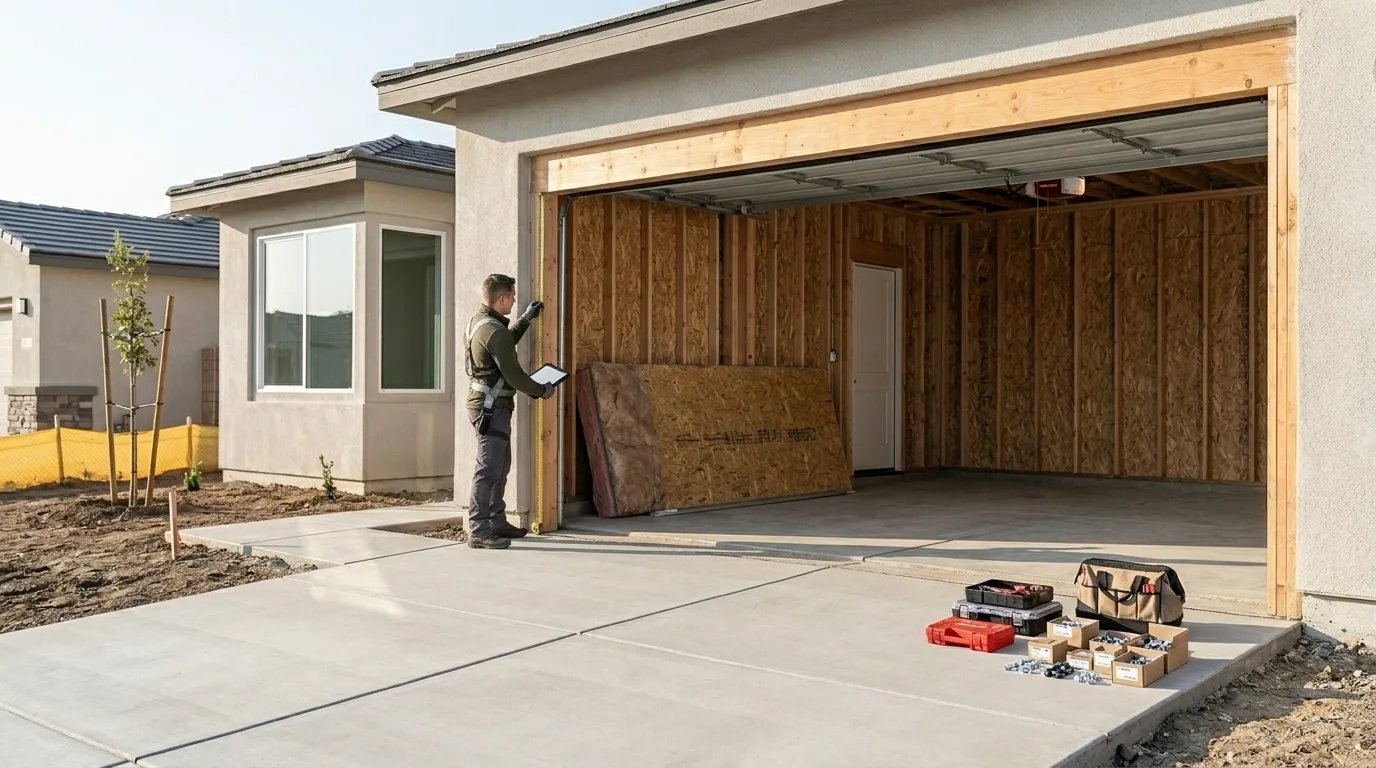
If you're pricing a new garage door in Cincinnati, you're probably staring at one of two things: a door that's cosmetically shot but still runs, or a door and track assembly that's fighting you every time it opens. Across the 59 named areas we work in - from Corryville and Avondale a couple miles out to Blue Ash and Forest Park ten miles further - most housing went up between 1938 and 1999, with the median build year sitting around 1972. That means a lot of garages were framed for door sizes and hardware that don't match what's on the shelf today. The opening might be a quarter-inch narrower than a modern standard, or the header might sit lower than current track clearance wants. None of that is a defect. It's just what a 1972-median housing stock looks like when you go to replace a door instead of patch it. A straight swap - new door on old track, no measurement check - is how you end up with a door that closes but never seals right at the bottom corners.
You can buy a garage door in a box. Whether you should install it yourself depends on what's actually holding your current setup together, not on how handy you are with a drill. On homes built in the 1960s and 70s - which describes most of what's in this service area - the section that fails first isn't the door skin, it's the track alignment and the spring sizing underneath it. Get the spring wrong for the door's weight and you've got a door that either won't stay up or slams down under its own weight, both of which are hard to notice until the door's already hung. We won't tell you it's impossible to do yourself. We will tell you that measuring the header height, checking the jamb square, and matching spring wire size to door weight are the three steps most DIY installs skip, and they're the three steps that determine whether the door works in January the same way it works in July.
Cincinnati sits in a cold-moderate climate band, and that matters more at install time than most people expect. Steel expands and contracts across the temperature swing between a humid July afternoon and a January cold snap, and a door hung too tight to its track in summer can bind in winter - or the reverse, a door set loose to avoid winter binding can rattle and sag by August. Getting that tolerance right at installation is a one-time job; getting it wrong means a callback every season change. The other complication is simpler and less forgiving: older openings, especially in the pre-1970 sections of the service area, sometimes have framing that's out of square by enough to matter. We measure for that before we order the door, not after. One honest limit here - if your framing needs structural work, that's a carpentry job, not a door job, and we'll say so rather than force a door into an opening that isn't ready for it.
The short version: a service area built mostly between 1938 and 1999, with the bulk of that stock dating to the 1960s and 70s, plus a cold-moderate climate that swings enough to stress steel and hardware twice a year. That combination is why installation here is less about picking a door style and more about getting the header measurement, track spacing, and spring weight right for a specific opening that was likely framed decades before the door you're buying was designed. It's also why a straight online spec sheet doesn't tell the whole story for a lot of houses in Corryville, Bond Hill, Westwood, or the older blocks near Norwood and St. Bernard. The opening in front of you is the one that matters, not the average one.
Usually, but not always. A lot of homes in this area were built between 1938 and 1999, and openings framed decades ago don't always match current standard door sizes exactly. We measure the header height, jamb square, and track clearance before ordering, so you're not stuck trimming trim or shimming a door that's a hair off.
Yes. The cold-moderate swing here between summer humidity and winter cold makes steel expand and contract more than people expect. A door hung too tight in warm weather can bind once temperatures drop. We set tolerances with that swing in mind so the door still runs right in January, not just on install day.
We don't have a fixed number to quote you without seeing the opening and confirming the door is in stock, since sizing and hardware vary house to house across this area's mostly 1960s-70s housing stock. We'll give you a real time estimate once we've measured your specific garage.
Depends on the door and the damage. If the panels are dented but the track and spring are sound, repair usually makes more sense. If the door is original to a house from the 1960s or 70s and the opening itself needs updating, replacement is often the more honest answer. We'll tell you which situation you're in before we quote anything.
Call now or request a free quote - same-day service on most repairs, upfront written pricing.