Cincinnati, OH · Garage Door Service
Cincinnati's housing runs from 1938 to 1999, with detached garages common in older sections and attached garages standard from the 1960s boom onward here.
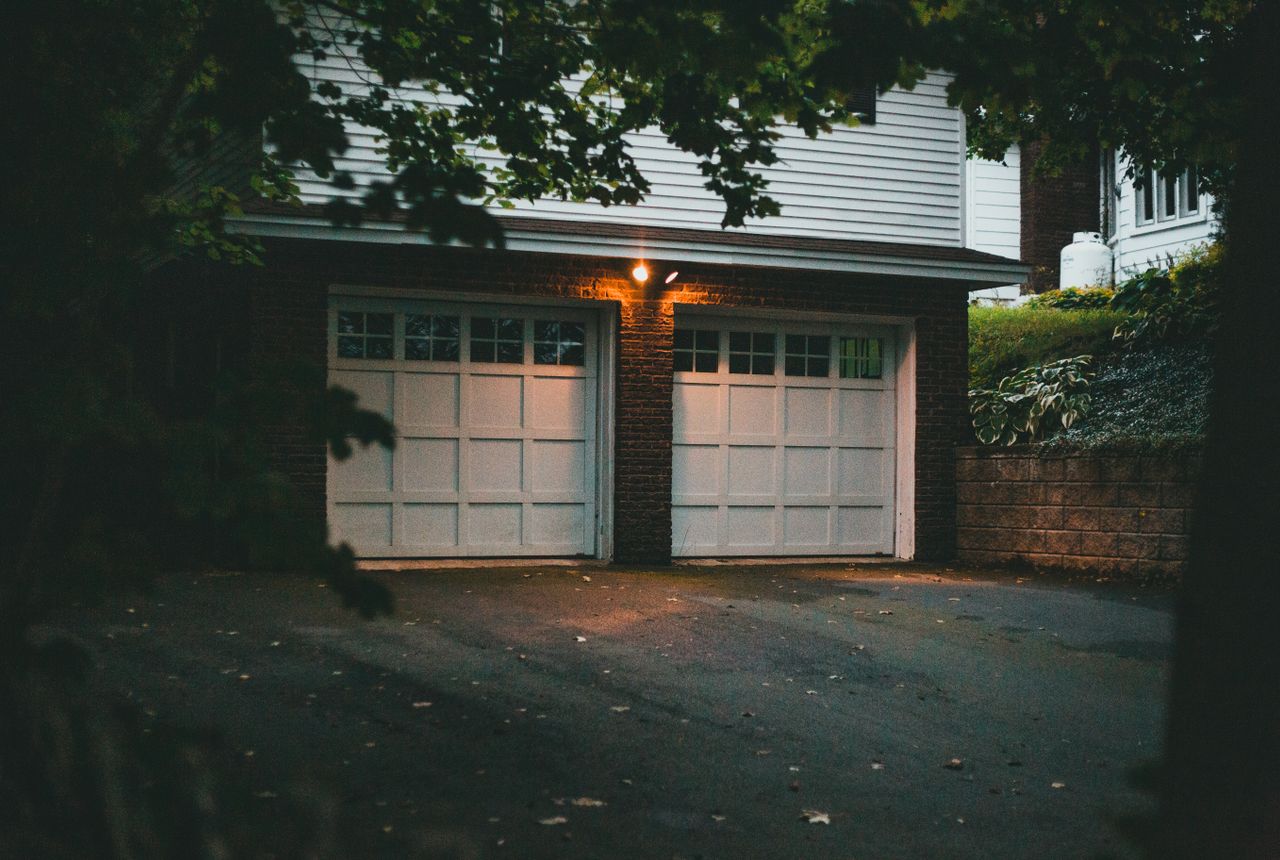
If your garage is attached, a broken spring or a cable that's jumped the drum isn't just a garage problem anymore. That door is one panel away from your living room, mudroom, or kitchen, and a door that won't seal or won't close all the way lets outside air straight into a room that shares a wall with the house. On a detached structure, the same failure is inconvenient but it isn't touching your heating bill or your home's air seal.
Across this service area, housing runs from 1938 up through 1999, with the middle of that range landing around 1972. A lot of attached-garage setups from that build wave are still running original torsion hardware - springs and drums nobody has serviced in decades. That's where DIY stops making sense: once a spring is broken on a double door, or the cable has come off the drum, the door is under enough stored tension that adjusting it yourself is a real injury risk, not a minor project.
We'll say plainly what we won't do: we don't recommend patching a torsion spring system that's original to a 1960s or 1970s build. At that age, the drums and shaft are usually as worn as the spring, and fixing one part just moves the failure point to the next one. Full spring and hardware replacement is the honest call there, not a repair.
A detached garage with a dented panel, a roller that squeaks, or a door that's slightly out of level isn't an emergency, and there's no reason to pay for a rush call on it. It sits away from the house, it's not affecting your insulation or your security envelope the same way, and cosmetic damage on a standalone structure can wait for a scheduled visit.
Even on an attached garage, some things can sit. A weatherstrip that's cracking but still sealing, an opener that's a little slow to close, a keypad with a sticky button - none of that needs a same-day call. The one thing we'd flag as worth watching rather than waiting on is any softening or gap at the bottom seal on an attached door, because in a cold-moderate climate like this one, that gap is a direct path for outside air into a shared wall.
Parts availability is worth mentioning here too, since it affects how much waiting actually costs you: certain older hardware sizes aren't something we keep on the truck, and ordering the right roller size or track bracket for a house from the 1950s or 60s can add a few days to a job that would otherwise be same-week. If your door still opens and closes and seals, that lead time costs you nothing. If it doesn't, it's the difference between a scheduled fix and a longer wait.
This service area covers 185,236 households, with 91,321 of those owner-occupied, spread across close-in neighborhoods like Corryville, Avondale, and Walnut Hills as well as farther-out communities such as Forest Park, Blue Ash, and Greenhills. Median household income across the area sits at $79,195, which matters for one practical reason: it's the number that decides whether replacing an aging detached garage door pencils out against another repair, or whether it's cheaper to keep patching a 1960s door for another few years.
Housing stock here spans 1938 to 1999, with the median build year around 1972, and the bulk of homes across the 59 communities we cover date to that 1960s-70s wave. That's the era when attached garages became the standard builder choice, replacing the older pattern of a detached structure set back from the house. So depending on which part of the area you're in, you might be dealing with a garage that was never meant to share a wall with living space, or one that was designed around that from the start - and the right door, insulation, and hardware differ for each.
We don't have data on which specific blocks lean detached versus attached, so we ask about your home's build era on the phone before quoting anything.
This region sits in a cold-moderate climate band, not the deep-freeze extremes you get farther north, but cold enough that temperature swings matter for anything sharing a wall with your house. An attached garage door has to manage that swing directly - the space behind it often sits close to conditioned space, so a poor seal or a non-insulated panel shows up as a cold wall in the room next door, not just a chilly garage.
A detached garage doesn't carry that same load. It can run colder in winter without touching your heating costs, which means the insulation value of the door itself matters less there than it does on an attached structure.
Given how much of the housing here dates to the 1960s and 70s, a lot of attached garage doors in the area are single-layer steel from an era before insulated doors were standard. Swapping that out for an insulated door is one of the more direct ways to deal with the cold-moderate swings this area gets, especially on an attached garage where that wall is doing double duty. On a detached structure, we'd usually tell you to spend that money elsewhere first.
Yes. On an attached garage we ask about sealing and insulation because that wall is shared with living space; on a detached structure the priority is usually just getting the door moving safely again. Tell us which one you have when you call and we'll ask the right follow-up questions before quoting.
If your home was built in the 1960s or 70s, which covers a large share of this service area, there's a good chance the torsion hardware is original. We check the spring, drum, and track age on the first visit rather than assuming, since some homes have already had partial replacements.
Not necessarily. An attached door benefits more from insulation because it borders conditioned space; a detached structure in this cold-moderate climate can usually run on a lighter-duty door without the same payoff from upgrading insulation first.
Call now or request a free quote - same-day service on most repairs, upfront written pricing.