Cincinnati, OH · Garage Door Service
Serving Evanston, 2 miles east of downtown Cincinnati. We know the 1960s-70s garage doors and openers common on this side of the city and what they need.
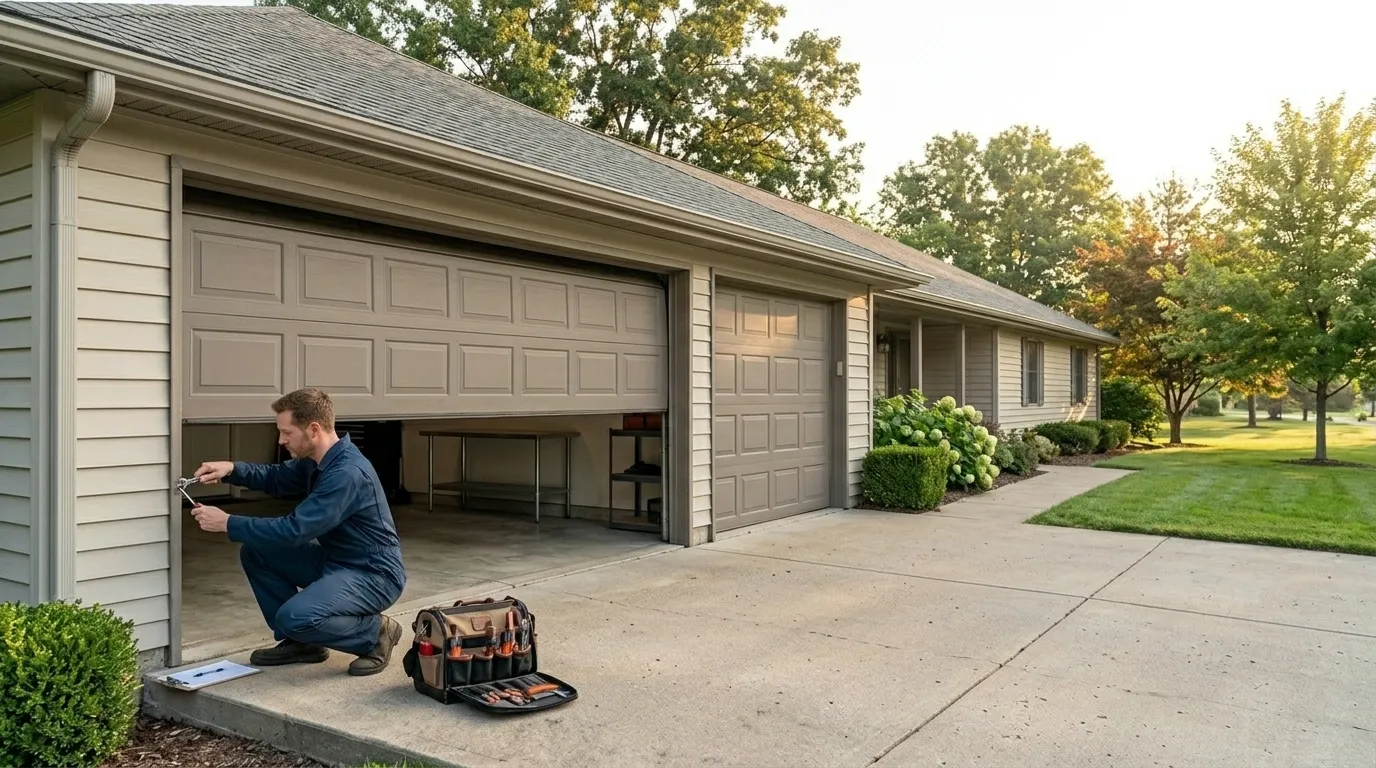
Evanston sits about 2 miles east of downtown Cincinnati, tucked in on the near-east side of the city. It's one of the closer-in neighborhoods we run to, which usually means a shorter wait between the call and the truck showing up compared to jobs further out toward the edge of the service area. We don't have a landmark list for this one - no cross streets, no parks named - so we're not going to pretend we do. What we do know is the housing stock, and that tells us most of what we need before we even get a look at the door.
Across the wider area we cover, houses mostly went up between 1938 and 1999, with the typical build year landing around 1972 and the heaviest concentration in the 1960s and 70s. Evanston falls inside that pattern. That era of construction usually means single-panel or early sectional steel doors, torsion springs sized for the lighter doors of that decade, and openers that have been swapped out once or twice already since the house was built. A lot of these garages were never insulated, since insulated doors weren't standard when the houses went in - worth knowing if you're chasing down why the garage runs cold in winter. We're in a cold-moderate climate band here, which is hard on old rubber seals and steel that's been painted over more than once. None of this is unique to Evanston block by block, but it's the honest baseline for a house built in that window, and it's what we expect to find when we open the panel.
Call and tell us what the door is doing - won't open, won't close, makes a noise, opener runs but the door doesn't move. If you know roughly how old the house is, that helps us guess at spring size and drive type before we're standing in front of it. We work from a set service area radius out from downtown Cincinnati, and Evanston, at 2 miles out, is on the closer end of that range. One honest limit: if a part is old enough or odd enough - some of the torsion setups from the 60s and 70s used hardware that's not made anymore - we may need to order it rather than carry it on the truck, and that adds a day or two rather than same-visit.
On houses from this era, the calls tend to repeat: a torsion spring that's finally given out after decades of use, rollers that have worn down to metal-on-metal and gotten loud, and openers original to a remodel from twenty or thirty years back that just quit. We also see cable fraying on the older drum setups, and doors that have been painted so many times the panels have gone stiff at the hinges. Replacement makes more sense than another repair when the door itself is original steel from the 60s or 70s - at that point the springs, track, and opener have usually all aged out together, and patching one part just means the next one fails a season later. We'll tell you straight which category your door is in before we start any work.
About 2 miles east of downtown Cincinnati. It's on the closer end of the area we cover, which generally means shorter travel time between the call and the truck arriving.
Often not. Houses in this part of the city were mostly built between the late 1930s and the 1970s, before insulated garage doors were standard, so a lot of original doors here are single-layer steel or older wood panel.
Standard sizes, yes. Some hardware from 1960s and 70s installs is no longer made in the original spec, and for those we may need to order a part rather than finish the job in one visit.
Call now or request a free quote - same-day service on most repairs, upfront written pricing.