Cincinnati, OH · Garage Door Service
Garage door repair and spring service for Carthage, a Cincinnati neighborhood 4 miles NNE of downtown built out mostly between the 1960s and 1970s.
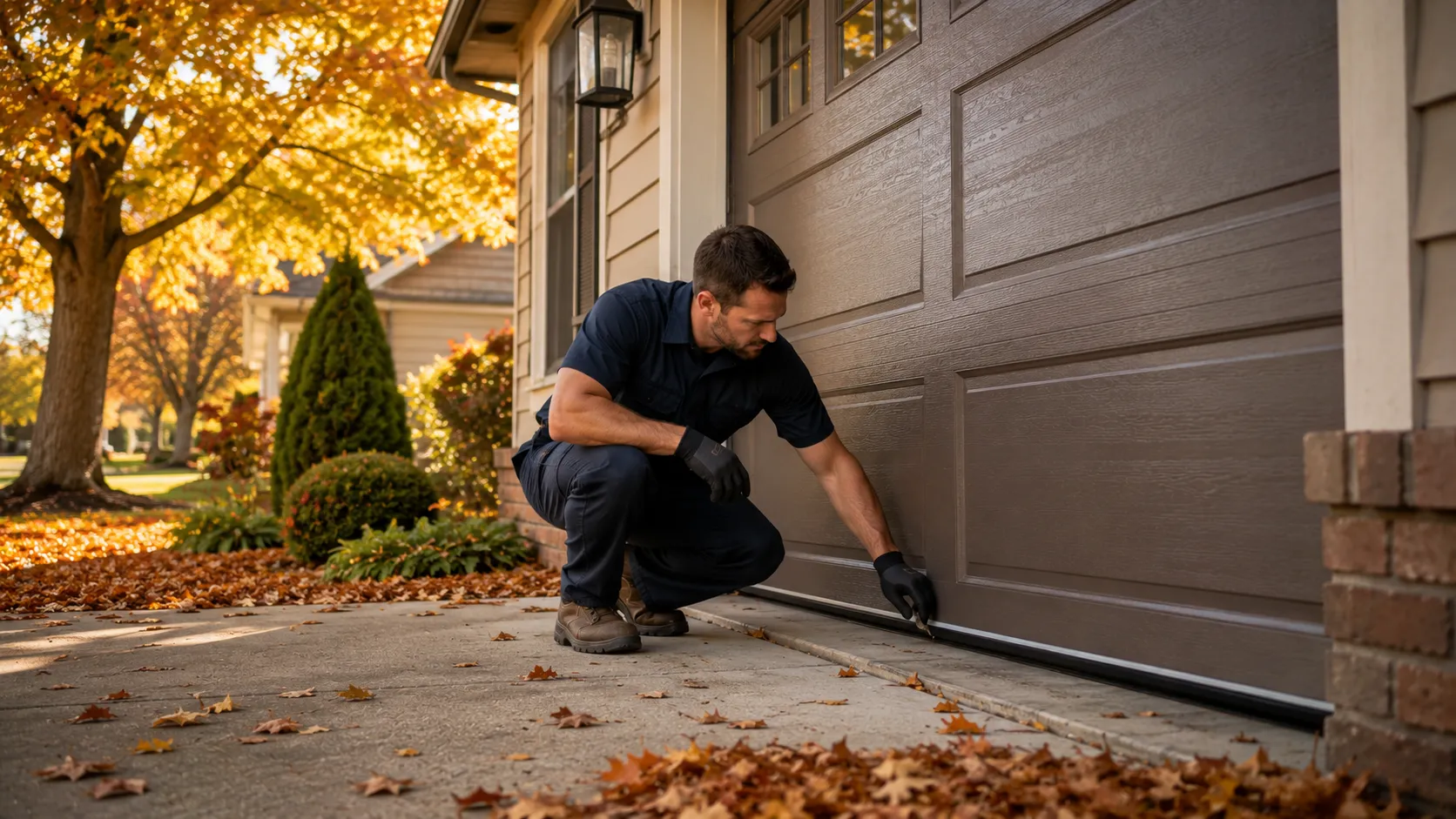
Carthage sits about four miles north-northeast of downtown Cincinnati, tucked between Bond Hill and Woodlawn in that stretch of the city where the older streetcar neighborhoods give way to the postwar subdivisions further out. We work this pocket along with the surrounding areas - St. Bernard two miles off, Winton Place a couple miles the other direction, Bond Hill just north - so a truck is never far from a Carthage call.
We don't have a landmark list for this one and we're not going to make one up. What we do know is the housing stock, because that's what actually drives the kind of garage door work a street sees. If you're calling us, you want someone who knows what's likely behind your door before the truck even leaves the shop, not a script about neighborhood charm.
Housing across this part of the service area was mostly built between 1938 and 1999, with the median landing around 1972 and the heaviest concentration going up in the 1960s and 70s. That puts a lot of Carthage garages in the same bracket: single-car and two-car bays built for the steel sectional doors and torsion or extension spring setups that were standard then, later retrofitted piecemeal as openers got swapped out over the decades.
That mix matters. A house built in 1965 doesn't have the same header clearance, track spacing, or spring cycle life as one built in 1995, even though both fall in our 1938-1999 range. On older openers we often find spring hardware that's been replaced once already, sometimes with parts that don't quite match the original door weight. We check that before we quote anything, because guessing on spring size is how you end up back at the same house in six months.
Winters here fall in the cold-moderate band, which is enough freeze-thaw cycling to stiffen grease in tracks and rollers and make marginal springs fail in January rather than July. It's not extreme cold, but it's consistent enough to matter over a 50-year-old door.
We schedule Carthage calls the same way we handle the rest of this corridor - Bond Hill, Winton Place, St. Bernard, and the neighborhoods within that same 3-5 mile band. Median household income across the wider service area runs about $79,195, and across the roughly 185,236 households here, close to half - 91,321 - are owner-occupied, which is the group we spend most of our time with: people fixing a door on a house they intend to keep, not flipping it.
Being honest about scope: we don't do new home builder installs or large commercial dock doors. If your door dates to the original 1960s-70s construction and the track hardware is original, we'll tell you straight whether it's a repair or whether replacement parts for that era are hard enough to source that a new door is the better use of your money.
On the older end of Carthage's housing stock, the most common calls are broken torsion springs on doors that have never been resprung, worn rollers on original track, and openers from the 80s and 90s that are on their second or third remote. Cold-moderate winters here mean spring failure tends to cluster in the coldest weeks, when a stiff, under-lubricated spring under tension finally lets go.
On the newer homes in the range - anything built closer to the 1999 end - we see fewer structural surprises and more opener electronics: sensor alignment, circuit boards, and worn drive belts. Either way, we start with the same question: is this a $20 part or a door that's past the point where fixing it makes sense. We'd rather tell you the second one up front than sell you a repair that won't hold.
Carthage sits about four miles north-northeast of downtown Cincinnati, close to Bond Hill and St. Bernard, both of which we also cover. It's a short run for the truck, so scheduling isn't the bottleneck - matching the right spring or track hardware to a house from this era usually is.
Not always as an exact match. Torsion and extension spring hardware from that era is often close enough in spec that a modern equivalent works fine, but header clearance and track spacing on older Carthage garages can differ from what's standard today, so we measure before we quote.
We handle repair and replacement, but we don't do new home builder installs or commercial dock doors. If your existing door is original to a 1960s or 70s build and parts are hard to source, we'll tell you honestly whether repair or full replacement makes more financial sense.
Cincinnati's winters fall in a cold-moderate band, which is enough freeze-thaw cycling to stiffen track grease and push a marginal spring toward failure. We see more spring-related calls in the coldest weeks of winter than any other stretch of the year.
Call now or request a free quote - same-day service on most repairs, upfront written pricing.