Cincinnati, OH · Garage Door Service
Serving Terrace Park's mostly-1950s housing stock, 10 miles from our Cincinnati base, with repair and replacement built for original torsion hardware and cold-climate wear.
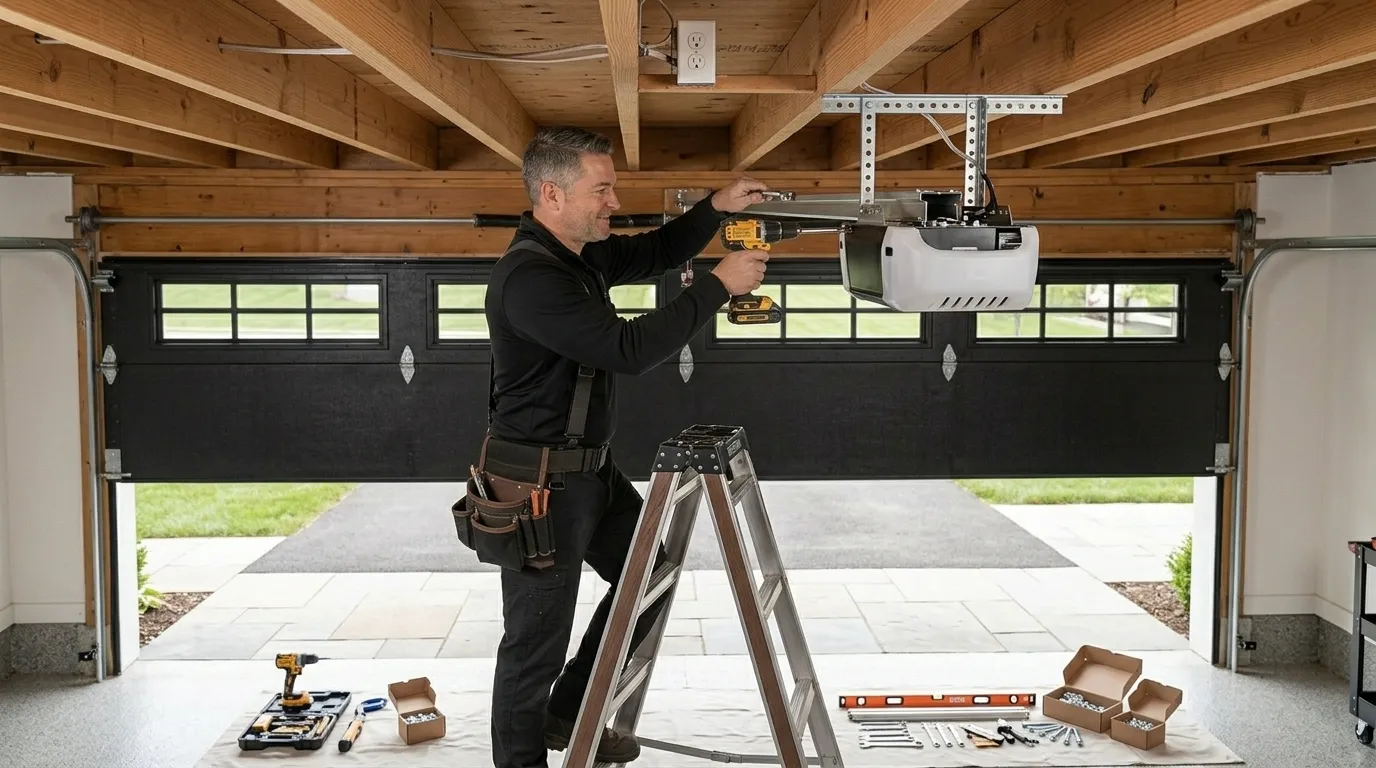
We don't keep a truck stationed in Terrace Park. We run out of Cincinnati, about 10 miles away, so same-day availability depends on our route that day, not on a local depot sitting around the corner. If you need a door open in the next twenty minutes for a car trapped inside, we're honest that a closer outfit might beat us there.
We also won't sell you a full opener swap when the fix is a $40 sensor alignment, and we won't quote a replacement door over the phone sight-unseen when your house was built in the 1950s. Original openings on houses this age are often narrower or shorter than today's standard sizes, and guessing the width from a phone call leads to a door that doesn't fit the frame. We'd rather look at it first.
Finally, we don't stock every obsolete part. Some of the wind-and-pin hinge sets and the older lift cable drums used on doors from the 1950s aren't made anymore, and if yours needs that exact part, we may be looking at a replacement panel or full door rather than a like-for-like repair. That's a real limitation, not a sales pitch dressed up as one.
Terrace Park's median year built is 1954, which puts it a full generation ahead of the wider service area's median of 1972. That eighteen-year gap matters more than it sounds: doors and openers installed in the 1950s predate the torsion-spring conversions and photo-eye safety sensors that became standard later, and a lot of these homes have already been through one or two retrofit cycles by owners who didn't always match original hardware.
Because we're driving in from Cincinnati rather than parking a truck here, we schedule Terrace Park jobs in blocks rather than promising an exact hour. That's not a dodge - it's how a route-based service actually works, and we'd rather tell you that up front than promise a window we can't hit.
Cold-climate wear (this whole area sits in a moderate-cold band) shows up here the same way it does elsewhere: stiffened lubricant, shrunk weatherstripping, and springs that lose tension faster in winter. On a 1950s door, that stress lands on hardware that's already sixty-plus years old, which is why service calls here skew toward spring and hinge failure rather than opener electronics.
A house built in 1954 was very likely fitted with a single-panel, single-piece door or an early sectional design, run on extension springs mounted along the horizontal track rather than a torsion bar over the header. If yours has never been upgraded, that's the setup we expect to find, and it changes how we diagnose a problem. Extension-spring systems fail differently than torsion systems - the safety cables that keep a snapped spring from becoming a projectile are a retrofit item on older doors, not a given.
Openings from this era also tend to run narrower than the 16-foot double-car standard common in newer construction, and headroom above the door can be tight, which limits which torsion conversion kits will actually clear the space. We measure before we quote for exactly this reason.
The honest tradeoff: on a door this old, a full torsion conversion with new track and drums often costs close to what a new door costs installed. We'll tell you which side of that line your specific door falls on rather than pushing the more expensive option by default.
With a median household income of $206,705 in Terrace Park, well above the wider area's median of $79,195, we see more owners choosing insulated steel or wood-composite doors with matching hardware finishes over the bare functional replacement that fits a tighter budget. That's not a judgment, it's just what the calls look like.
At 739 households, this is a small area, and word travels - a bad repair on one street gets noticed on the next. We size our recommendations to the house in front of us: a 1954 door with original brick molding and a narrow opening doesn't get the same panel style as a garage added on in a later renovation.
We travel to Terrace Park as part of our wider coverage from Cincinnati, alongside nearby areas like Mariemont and Newtown, so we're familiar with the general age and layout of homes on this side of the region even without a local office.
No. We're based in Cincinnati, about 10 miles out, and we drive to Terrace Park as part of our regular coverage area. We don't keep a truck or office in town, so scheduling runs on our route for the day rather than a promised arrival window.
Terrace Park's median year built is 1954, well ahead of the broader area's 1972 median. Many original doors here were single-piece or early sectional units on extension-spring hardware, not the torsion-bar systems standard in newer construction, which changes both how they fail and how they get fixed.
Sometimes. It depends on whether the original manufacturer's panel profile is still produced. On doors from the 1950s, an exact match often isn't available, and we'll tell you that honestly rather than order a mismatched panel and hope it blends in.
Often it costs close to what a new insulated door runs installed, once you add new track, drums, and header clearance work. We measure the opening and headroom first and tell you which option makes more sense for that specific door rather than defaulting to the bigger job.
Call now or request a free quote - same-day service on most repairs, upfront written pricing.