Cincinnati, OH · Garage Door Service
Serving Sherwood, OH from Cincinnati, 9 miles out. We work on the 1971-median housing stock here: torsion springs, worn rollers, and openers from the original build era.
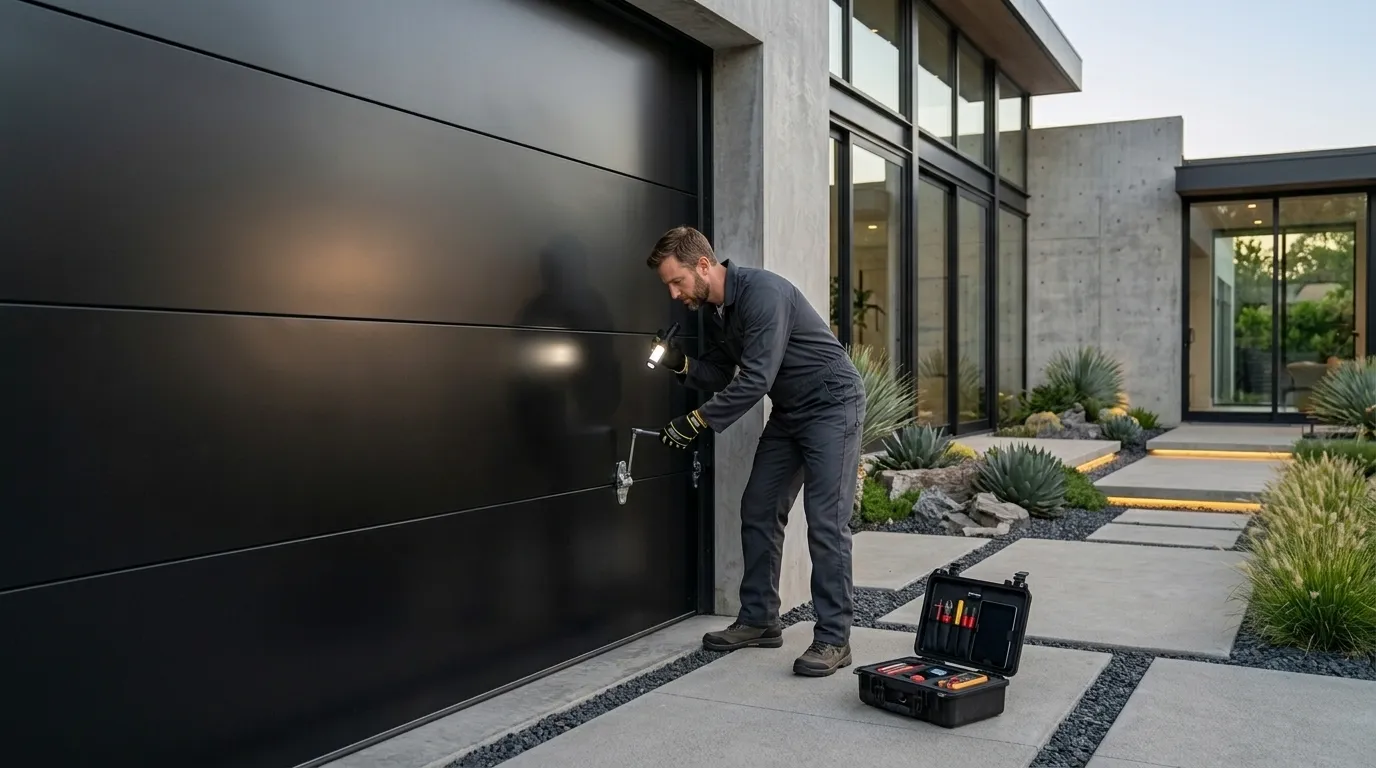
We're upfront about the edges of this job. We travel from Cincinnati to reach Sherwood, about 9 miles out, so we don't offer a same-hour walk-in counter here the way a shop physically in town might - we schedule the visit and drive it. We also won't quote a repair over the phone without seeing the door; torsion spring sizing depends on cycle count and door weight, and guessing wrong means a second trip. If a panel is cracked clean through or a track is bent past 15 degrees, we'll tell you replacement beats patching it, even though the repair would be the easier sale. And on openers older than what the house was built with, parts can take longer to source than the job itself - we'll say so before we book the work, not after.
Sherwood sits in the COLD-moderate climate band that covers this whole service area, which matters more for a 1971-built garage than people expect. Steel from that era wasn't spec'd for the freeze-thaw cycling this region gets, and original hardware on a door pushing 50 years old is past the point where a single part swap fixes it for good. We plan the visit, not a guess over the phone, because torsion spring wind and drum size on a door this age often don't match what's on the shelf at a big-box store. If you're calling about a dead spring in January, expect us to talk through what we're bringing before we're on the road, since a 9-mile trip with the wrong spring cage means starting over.
The median home in Sherwood was built around 1971, which puts most doors here squarely in the original one-piece or early sectional era - torsion or extension hardware mounted the way builders spec'd it fifty years ago, not the way manufacturers spec it now. That means brackets sized for a lighter door, tracks with less clearance, and openers (where they've been added at all) bolted to framing that predates the current code assumptions. This isn't the newer-construction pattern you'd find in a subdivision built in the 2000s, where doors are heavier, insulated, and running on opener rail systems designed together with the door. Here, the common failure is a fatigued torsion spring on original drums, or a roller track pulling loose from wood jambs that have shifted slightly over five decades. We size parts to match what's actually on the house, not what's standard on a new build, because swapping in a modern spring on old drums is how doors come off track.
With roughly 1,494 households and a median income near $132,653, Sherwood is a smaller, tighter market than much of the wider Cincinnati service area, which runs closer to $79,195 median across its 185,236 households. That income gap tends to show up in what people ask for: fewer patch jobs, more requests to just replace a door and opener together rather than keep nursing 50-year-old hardware. We don't push replacement where a repair holds - a fatigued spring or a worn roller set is often a real fix, not a stopgap - but we also won't talk you into re-repairing hardware that's outlived its parts.
About 9 miles from our Cincinnati base. We don't keep a depot in Sherwood itself, so every job is a scheduled drive out, not a walk-in visit. That's worth knowing if you're expecting a same-hour drop-in.
Sherwood's homes cluster around a 1971 median build year, which usually means original torsion or extension hardware sized for lighter, older doors. Modern replacement parts aren't always a drop-in match, so we check drum size and spring wind before ordering anything.
Depends what's failing. A worn spring or roller set on solid original hardware is often a fair repair. A cracked panel, badly bent track, or an opener with no parts left to source usually tips toward replacement - we'll tell you which one you're looking at.
Call now or request a free quote - same-day service on most repairs, upfront written pricing.