Cincinnati, OH · Garage Door Service
Cincinnati Garage Door Pros travels 11 miles to Pleasant Run for garage door repair and replacement, matched to the area's 1970s housing stock and cold-climate wear patterns.
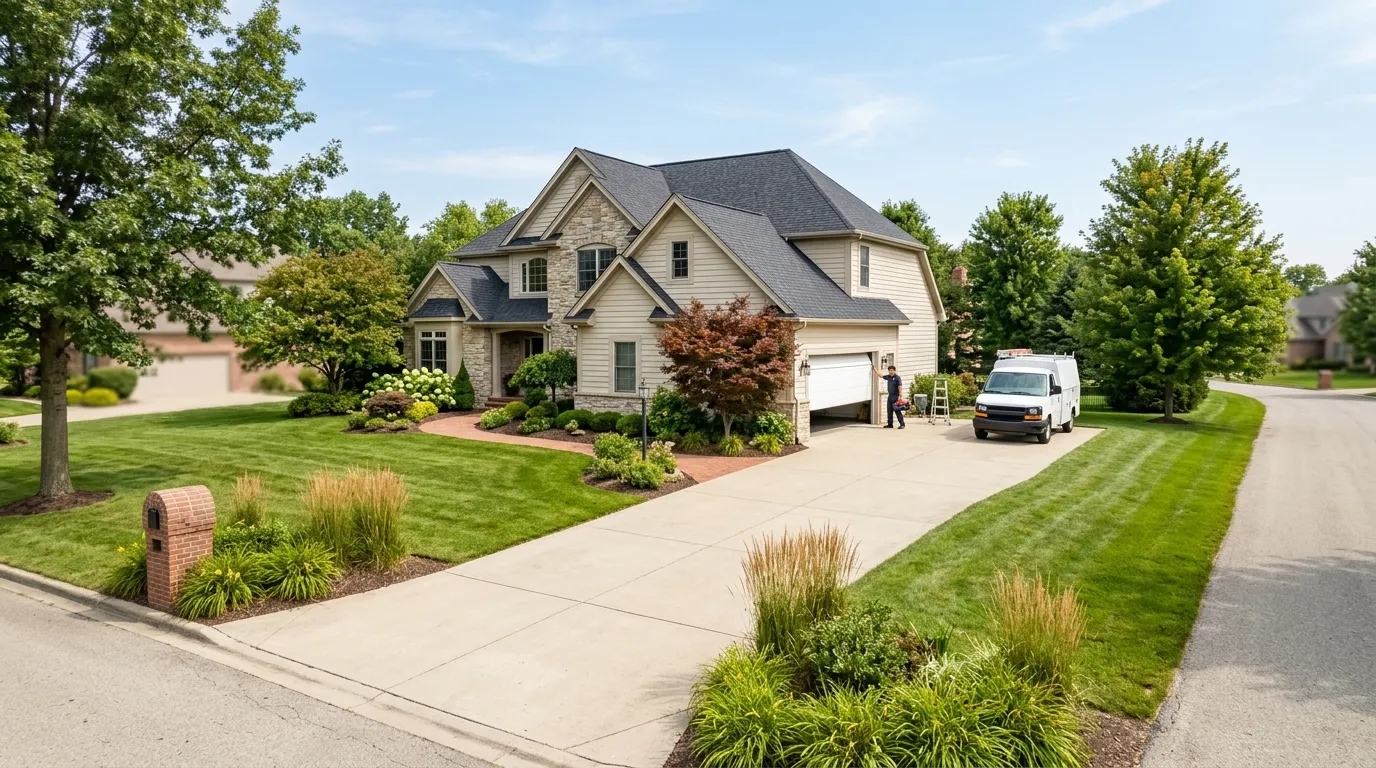
We run out of Cincinnati, about 11 miles from Pleasant Run, so we do not promise a same-day depot response the way a shop physically based in the neighborhood might. If your door is jammed shut and blocking the only way to get a car out, say so when you call, but understand the truck is coming across town, not around the corner.
We also will not quote a torsion spring or panel replacement sight unseen over the phone for a house we have not looked at. Pleasant Run's housing dates mostly to the mid-1970s, and doors from that era sometimes carry track widths or spring drums that newer stock doors don't match. Guessing a part number wrong means a second trip, which costs you more than waiting for an accurate look.
Last, if your door's problem is really a framing or header issue - a sagging opening, rotted jamb, something structural - that's carpentry, not garage door work. We'll tell you plainly when a repair isn't the actual fix and point you toward what is, rather than bolting new hardware onto a frame that won't hold it.
Eleven miles each way means we build Pleasant Run calls into a route rather than treating them as a standalone stop, so the more specific you can be about symptoms up front - won't open, cable off the drum, opener runs but door doesn't move - the better we can plan the trip and bring the right part the first time.
The area sits in a cold moderate climate band, which matters more here than people expect. Winter temperature swings tighten steel springs and stiffen nylon rollers, and that's when a spring that's been slowly fatiguing all year finally lets go. We see a real bump in torsion spring failures on cold mornings, less because the cold breaks anything outright and more because it's the final push on a spring that was already near its cycle limit.
There's no way around the travel time, and we won't pretend otherwise. What we can do is show up with the fix rather than a diagnosis, once we know what we're dealing with.
Pleasant Run's median build year runs around 1976, a few years past the 1972 median for the wider service area, which puts most doors here squarely in the steel sectional generation rather than the older one-piece wood slabs you'd find on 1950s stock closer to the city. That's a meaningful difference: sectional doors from this period typically ran on extension springs mounted along the horizontal track rather than a torsion bar over the header, and extension spring setups fail differently - a snapped cable or a stretched spring rather than a torsion drum letting go all at once.
Across the broader area, most housing dates to the 1960s and 70s, so parts supply for this generation is still workable, but original hardware on a door that's never been touched in close to fifty years is a different animal than a door installed in the last decade. Safety cables on older extension spring setups are the thing we check first, since a lot of installs from this era went in before that safety-cable expectation was standard practice.
Pleasant Run has around 1,894 households, smaller and more contained than the roughly 185,000 households across the full service area, and median household income here runs about $84,392, a bit above the wider area's $79,195. That income gap tends to show up in the driveway: more two-car garages, more insulated steel doors installed as upgrades rather than left as builder-grade originals, and more owners who've already had an opener swapped out at some point.
What we still find consistent with a lot of mid-1970s construction is garage depth. Houses built in this window often have shallower garages than what gets built today, which limits which opener rail lengths and which insulated door thicknesses fit without modification. It's worth measuring before you fall in love with a specific door online, because a door that looks right in a photo can be too deep for the opening once you account for header clearance.
No. We work out of Cincinnati and travel to Pleasant Run for jobs, about 11 miles each way. We don't keep a depot or stage inventory in the area, so scheduling is built around a route rather than an on-call presence.
A lot of Pleasant Run houses date to the mid-1970s and were built with extension spring setups running along the horizontal track, rather than the torsion bar over the header you'd find on newer installs. Extension springs stretch and fatigue differently, so they tend to fail as a snapped spring or a popped cable rather than a torsion drum letting go.
Yes. The area sits in a cold moderate climate band, and steel springs stiffen and lose flex in winter temperature swings. A spring that's near the end of its cycle life often fails on a cold morning even though the cold isn't the root cause - it's usually the final push on wear that built up over years.
Not always. Houses from this era often have shallower garage depth than newer construction, which limits header clearance and opener rail length. We measure the opening before recommending a specific door thickness so you're not stuck with one that doesn't clear.
Call now or request a free quote - same-day service on most repairs, upfront written pricing.