Cincinnati, OH · Garage Door Service
Newtown homes mostly date to the early 1980s, later than the wider Cincinnati stock. We travel from Cincinnati to work on the openers and doors that era actually used.
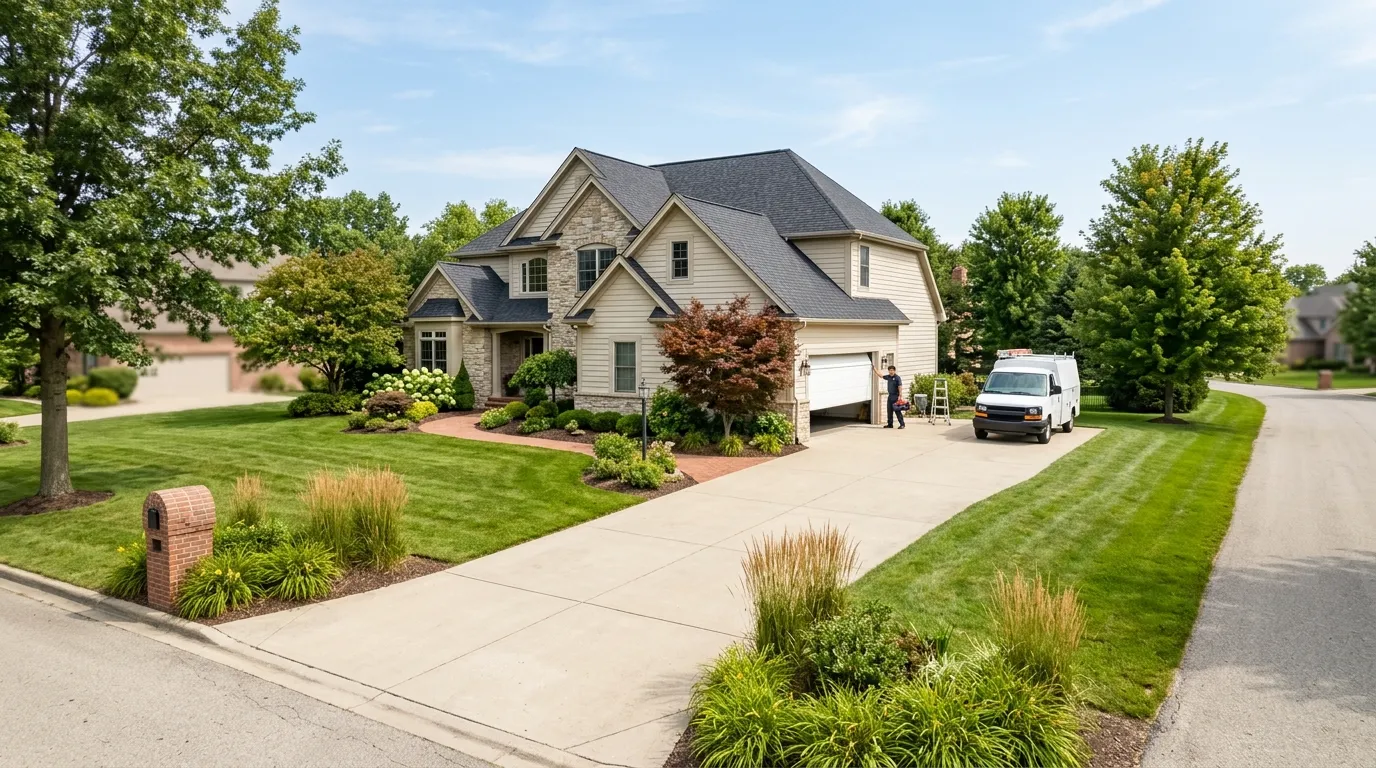
We don't keep a crew stationed in Newtown, and we won't pretend otherwise - every job here means a truck coming out from Cincinnati, about 8 miles away. That's a short trip, but it means we can't offer a same-hour walk-in the way a shop physically in town could.
We also won't try to force a fix onto hardware that's past saving. If a torsion spring system on a door from the early 1980s has a rusted-through shaft or a cracked cast-iron end bearing plate, patching it is a waste of your money - we'll tell you when replacement is the honest answer instead of stacking repairs on a door that's done.
We don't work on doors where the track has pulled loose from rotted jamb framing until that framing is fixed by someone else first - a new track bolted to soft wood just tears out again. And we don't guess at parts. If your opener is an older chain-drive unit and the logic board is proprietary, we'll tell you upfront if we need to source the part before we can commit to a repair date.
Because we're routing from Cincinnati rather than sitting in Newtown, we build the day's schedule around distance and order of calls, not just who called first. At roughly 8 miles out, Newtown isn't a long drive, but it does mean the appointment window is a window, not a promise of the next available hour.
Winters here still bring the same cold-moderate swings as the rest of the region, and that matters for timing too: a spring that snaps in January doesn't wait for a convenient slot, and neither do we when a call comes in with a door stuck open in freezing weather. We just ask for a little patience on the drive.
Newtown's housing stock runs newer than the median for the wider Cincinnati service area. Across the broader area, homes were mostly built between 1938 and 1999, with a median build year of 1972 - but Newtown's own median build year is 1982, a full decade later. That decade matters more than it sounds like it should.
A door installed on a house built in 1982 is far more likely to already be on a torsion spring system with a standard extension-spring backup than the side-mounted, low-headroom torsion setups common on the 1950s-and-60s builds elsewhere in the service area. Steel sectional doors were standard by then too, replacing the older wood panel doors that dominate in the pre-1960 pockets of the region.
What that means practically: parts for a 1982-era door are usually easier to match than parts for something from 1958. Standard-width torsion springs, common opener rail sizes, and off-the-shelf steel panels are more likely to fit without a custom order. It doesn't mean nothing breaks - just that when it does, the fix is usually more straightforward.
With a median household income of $97,917, noticeably above the broader service-area median of $79,195, and around 1,134 households in the area, Newtown tends toward larger, better-maintained garages attached to homes built in the early 1980s building boom rather than older infill housing.
That build era usually means two-car attached garages with a single wider door rather than the narrower single-bay setups common on older housing stock closer to the urban core. Wider doors carry more weight, which means the torsion springs sized for them are heavier-duty - worth knowing if you're comparing a repair quote here to one you heard about from a friend in an older part of town, since the spring itself may simply be a bigger, more expensive part.
Openers from this era, if original, are likely aging out regardless of how well the door itself has held up - chain-drive units from the 1980s and 90s are mechanical, not smart, and when the logic board finally goes, replacement is usually more sensible than hunting for a part.
No. We work out of Cincinnati and drive to Newtown for every job, about 8 miles each way. We don't claim a local depot or a guaranteed same-hour arrival because of that - we schedule around the day's route and let you know a realistic window.
It's possible, especially if no one has mentioned replacing it. Doors and openers from that era were often steel sectional with standard torsion or extension springs, which tend to hold up reasonably well, but 40-plus years is well past the expected service life of the springs and most opener logic boards.
Newtown's housing stock leans toward wider two-car garage doors from the early 1980s building boom, which need heavier-duty torsion springs than the narrower single-bay doors common on older homes elsewhere in the service area. A bigger door means a bigger, pricier spring, not a different labor rate.
If the part is still available, yes. Some older chain-drive units use proprietary boards that are hard to source, and in those cases we'll tell you honestly if replacement makes more sense than chasing a part that may take weeks to find.
Call now or request a free quote - same-day service on most repairs, upfront written pricing.