Cincinnati, OH · Garage Door Service
Garage door repair and spring replacement for Mount Washington homes built mostly in the 1960s and 70s. Local service, straight talk about what your door actually needs.
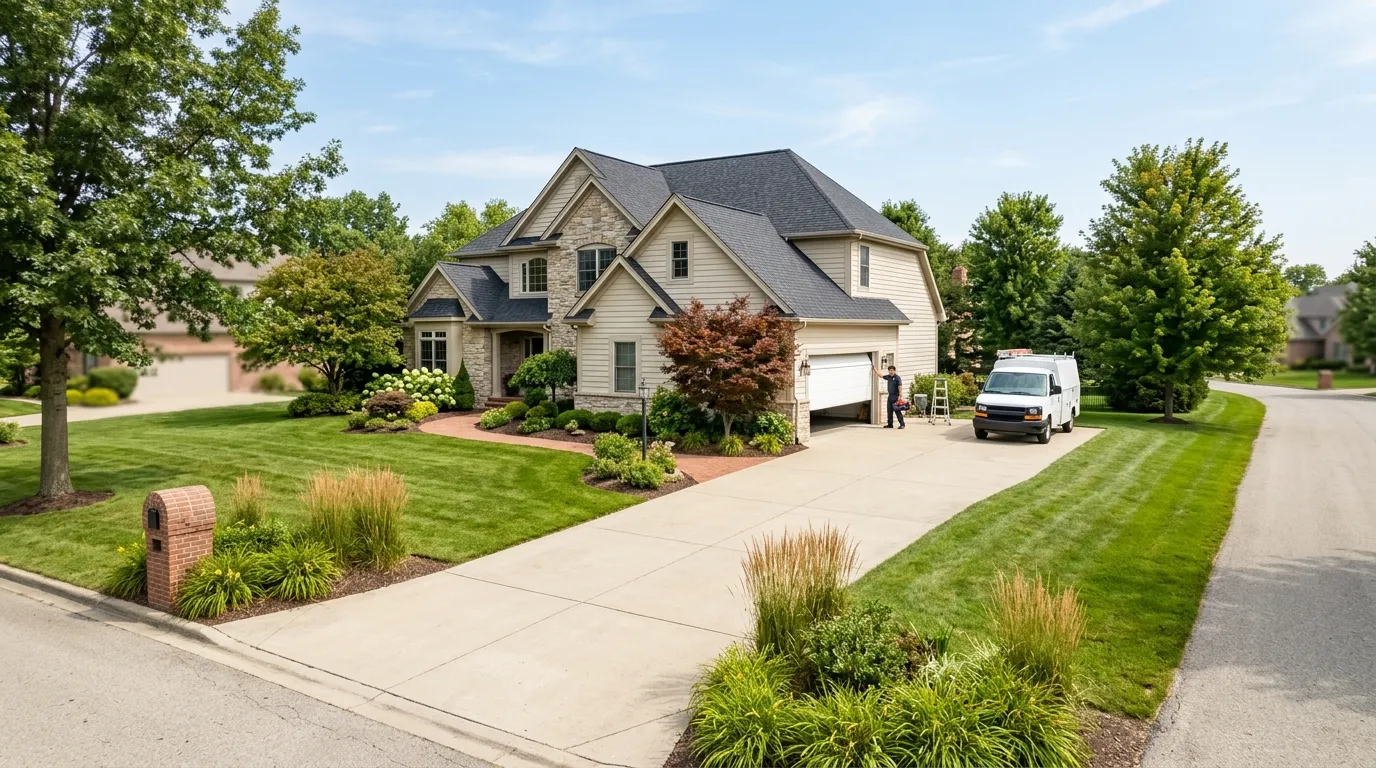
Mount Washington sits about 8 miles east-southeast of the center of the Cincinnati service area we work across. We don't have a landmark list for this neighborhood and we're not going to invent one - no street names, no corner store, nothing we can't back up. What we can tell you is where it falls in the broader area: part of a service territory that covers 185,236 households, with 91,321 of those owner-occupied. That matters for garage door work because owner-occupied houses are the ones where the door gets fixed instead of ignored until it fails on a renter's watch.
We show up here the same way we show up anywhere in that territory - with a truck stocked for the kind of hardware this part of town tends to have, based on when the houses were built, not on any guess about what street you live on.
Across the service area, housing runs from 1938 to 1999, with the median build year landing around 1972, and the bulk of it concentrated in 1960s and 70s construction. That's the story on a lot of streets in this part of Cincinnati, Mount Washington included as far as the housing stock goes even without a block-by-block count for it specifically.
A house from that window usually means a torsion spring system mounted on the header above the door, not the older side-mounted extension springs you'd find on something built before the war. It also often means a single steel panel door, sometimes still original, sometimes swapped once already for a lighter aluminum or insulated steel replacement somewhere in the 90s or 2000s. Openers from that era of retrofit are usually chain-drive, and by now most of them are on borrowed time - the gears wear out long before the motor does.
Winters here sit in the cold-moderate band. That's not brutal cold, but it's enough freeze-thaw cycling over a season to stiffen springs, dry out weatherseal, and work rollers loose in their tracks a little more every year.
Call and tell us the age of the house if you know it, or just the decade it feels like - 60s ranch, 70s split-level, whatever you've got. That alone tells us a lot about what's likely mounted above your door before we ever pull into the driveway, which means we come with the right spring size and the right roller stock instead of guessing on site.
One honest limit: if your door needs a part specific to an older or discontinued panel design, we may need to order it rather than carry it on the truck, and that can add a day or two. We'd rather tell you that up front than promise a same-visit fix we can't deliver.
We serve this address as part of the wider Cincinnati-area territory, not as a separate branch or crew, so scheduling works the same way it does across the rest of the area we cover.
On houses from this build era, the calls tend to repeat. Torsion springs that have done their 10,000-cycle run and finally let go, usually announced by a bang and a door that won't budge. Chain-drive openers from a prior retrofit grinding instead of pulling, which is the gear set failing, not the motor. Rollers that have gone from steel to nylon at some point in the house's history, worn down and rattling in tracks that have picked up rust from years of cold, damp winters.
We also get called for panels dented or rusted through near the bottom, where the freeze-thaw cycling this area sees does the most damage over a couple of decades. Sometimes the honest answer is a repair - a spring, a roller set, a section of track. Sometimes the door is old enough and worn enough on enough fronts that patching one part just means the next part fails in a few months, and replacement is the better use of the money. We'll tell you which one you're looking at instead of defaulting to whichever job is bigger.
Based on the housing stock in this part of Cincinnati, mostly built between 1938 and 1999 with a lot of it from the 1960s and 70s, expect a torsion-spring system mounted above the door rather than older side-mount extension springs, often paired with a steel panel door and a chain-drive opener installed sometime later.
This area sits in a cold-moderate climate band, which means real freeze-thaw cycling most winters. That stiffens spring steel, dries out weatherseal, and stresses rollers and cables more than a mild climate would, so failures cluster in the colder months even on doors that were fine all summer.
For common gear-and-sprocket failures on chain-drive openers from the 80s and 90s, usually yes. For a discontinued panel design or an unusual older track configuration, we may need to order the part, which can add a day or two. We'll tell you on the visit if that's the case rather than guess.
Call now or request a free quote - same-day service on most repairs, upfront written pricing.