Cincinnati, OH · Garage Door Service
Local garage door repair for Monfort Heights South, Cincinnati - built out mostly in the 1960s-70s, sitting six miles WNW of downtown with cold-climate hardware needs.
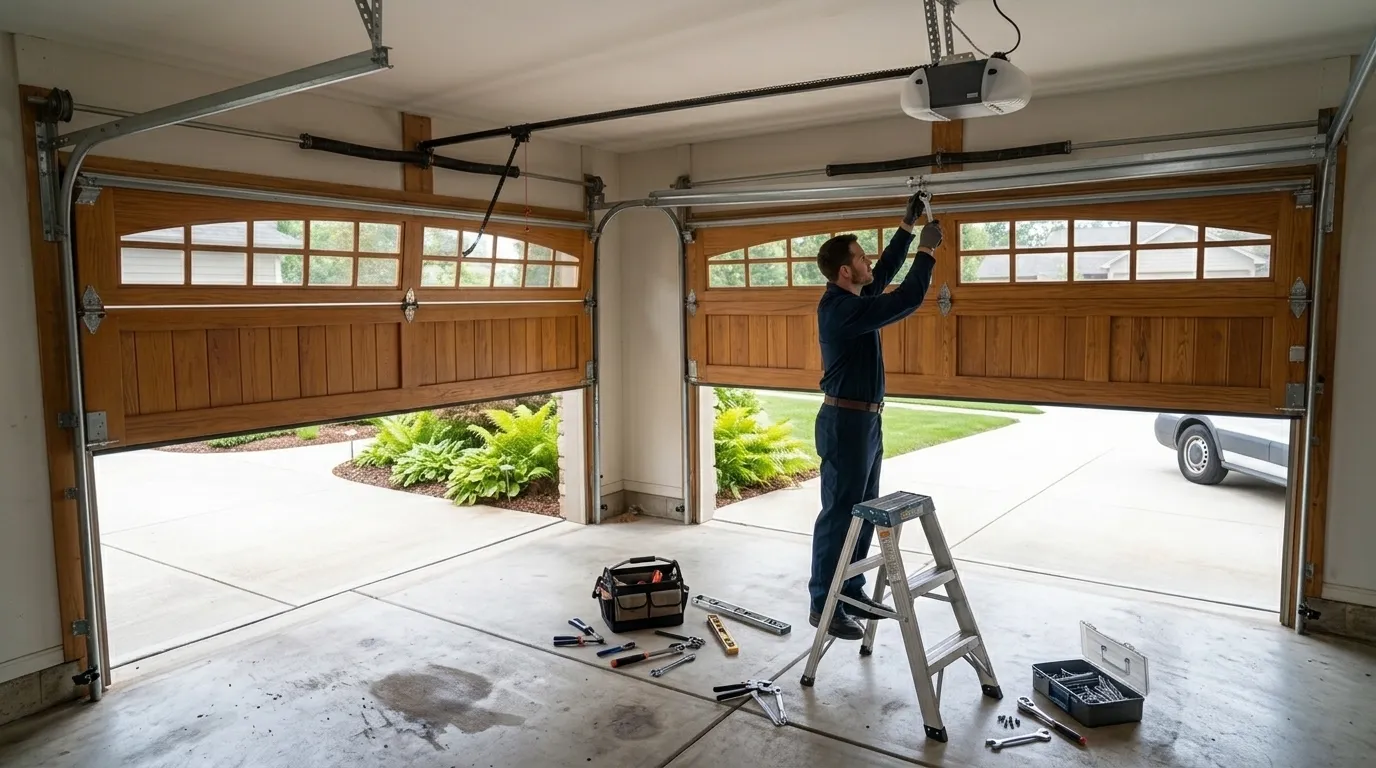
Monfort Heights South sits about six miles west-northwest of downtown Cincinnati, part of the broader Monfort Heights area on the city's west side. We don't have a landmark list for this specific pocket of streets, so we won't pretend to know your corner store or your church - but we know the ground this neighborhood was built on and the kind of doors that went up with it.
It falls inside the wider service area we cover, which runs from the urban core out through dozens of named neighborhoods and suburbs - everywhere from Corryville a few minutes south to Forest Park ten miles north. Monfort Heights South is on the western edge of that footprint, closer to Cheviot and White Oak than to the river.
We mention the distance because it matters for how we schedule: a call from six miles out doesn't sit behind a job downtown the way a call from twenty miles out might. It's a short run for a truck already working the west side.
Across the service area, housing generally dates from 1938 to 1999, with the median build year landing around 1972 and most of the stock concentrated in the 1960s and '70s. That fits what you'd expect walking a block in Monfort Heights South - ranch and split-level houses from a build-out era when attached garages became standard, not an afterthought.
That means a lot of the original garage door hardware in this pocket is either the first replacement cycle or the second. Doors from that build window were often installed with lighter steel and simpler torsion or extension setups than what's sold today, and by now most have had at least one spring replaced, sometimes without upgrading the drum or cable to match. We see mismatched hardware on doors like this more than we see it on newer builds - a spring swapped in the 1990s paired with an opener from 2015.
The area sits in a cold, moderate climate band, which over fifty-plus years does real work on steel and on the weatherstripping at the bottom panel. Track alignment drifts as slabs settle, and older doors without insulation show it in the temperature swing between the garage and the house. None of this is dramatic - it's ordinary wear from an ordinary Cincinnati winter, repeated a few dozen times.
We work calls from Monfort Heights South the same way we work the rest of the west side - you tell us what the door is doing (won't open, opens crooked, makes noise, won't close all the way) and we bring the parts likely to match a house from this era rather than guessing on-site.
One honest limitation: if your door needs a less common panel size or a discontinued opener part, we may need to order it, and that can take a few days depending on the manufacturer. We'd rather tell you that up front than promise a same-visit fix we can't back up.
Income and household figures for the wider service area put median household income at $79,195 across roughly 185,236 households, with about 91,321 of those owner-occupied. That's relevant mostly in one practical way: it tells us most calls here are homeowners deciding between a repair and a replacement, not landlords doing the minimum. We price and recommend accordingly - we'll tell you when a fix is the better bet and when it isn't.
Given the housing stock, the calls we get from this part of the west side lean toward a specific set of problems. Torsion springs original to a 1960s or '70s install, now well past their cycle count, are common - they tend to go on a cold morning when the steel is stiffest. Rollers and hinges on doors that have never been serviced show up as the grinding or shuddering noise homeowners describe on the phone.
We also see openers that have outlived a door or two - a chain-drive unit from the 90s bolted to a replacement door it was never sized for. And on houses that added insulation or finished the space over the garage, we get calls about a door that suddenly seems too heavy or too light for its springs, because the balance was never rechecked after the swap.
What we don't get much of here is exotic custom door work - high-end architectural doors aren't common on this housing stock, and we won't oversell you into one. Most jobs in Monfort Heights South are steel doors, standard sizes, and hardware that matches a house built when Nixon or Ford was in office.
We don't work off a landmark or street list for this neighborhood, so we won't claim familiarity with your exact block. What we do know is the housing era and the hardware that came with it, which is usually more useful for diagnosing a door problem than knowing the street name.
On houses from the 1960s-70s build era common in this area, original torsion springs are decades past their rated cycle count. Once one goes, the other is usually close behind. Replacing both at once, matched to your door's weight, is standard practice and avoids a second call soon after.
It's about six miles west-northwest of downtown Cincinnati, inside the west side of our service area. That's a short run for a truck already working nearby neighborhoods like Cheviot or White Oak, so scheduling is usually straightforward.
For common torsion springs and rollers, same-visit is typical. For a less common panel or a discontinued opener board, it can take a few days to order. We tell you at the door which situation you're in rather than guessing.
Call now or request a free quote - same-day service on most repairs, upfront written pricing.