Cincinnati, OH · Garage Door Service
Serving Milford's mostly 1960s housing stock, 12 miles from our Cincinnati base - spring, opener, and track repairs matched to what these houses actually have.
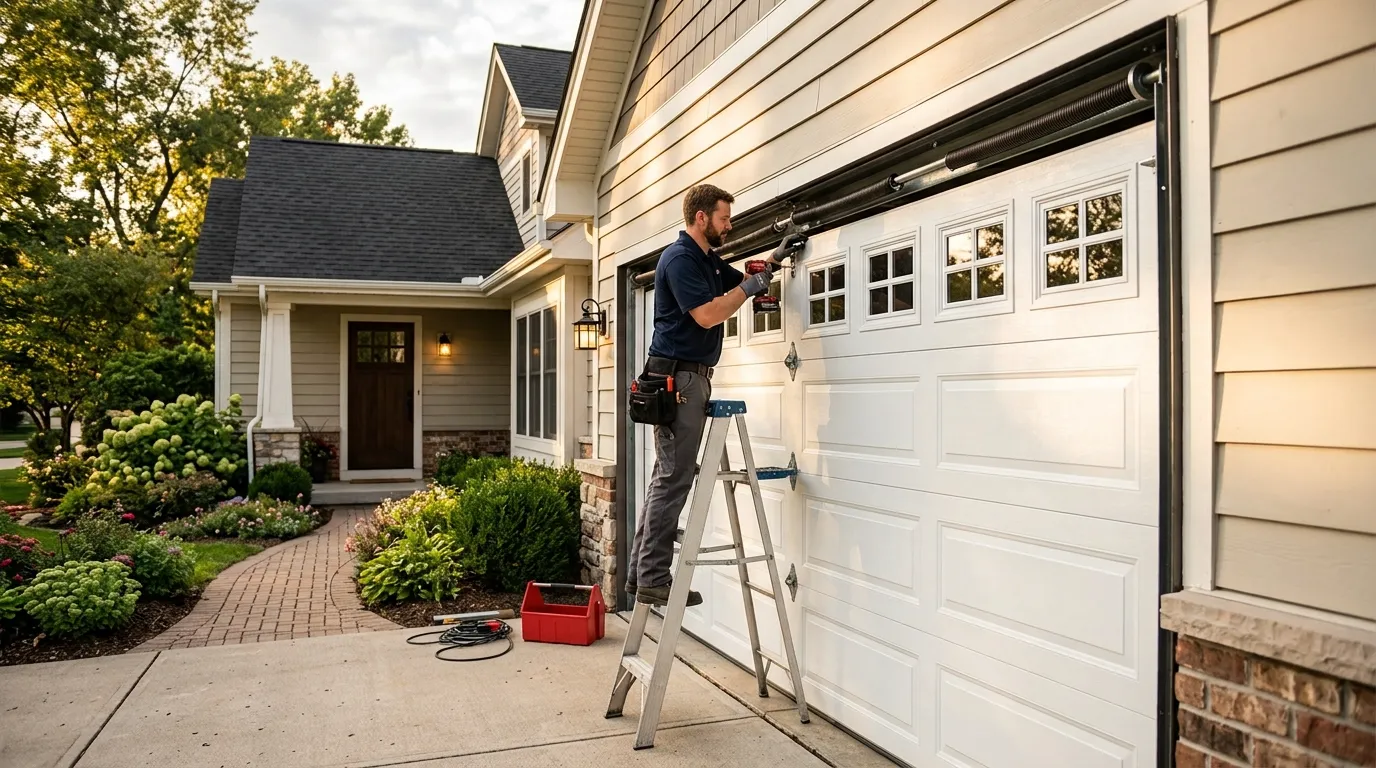
We run out of Cincinnati, about 12 miles from Milford, so we don't pretend to have a truck parked around the corner - we schedule the drive into the job, and that means we're not the call for a same-hour emergency where every minute counts. If your door is the only thing between your house and the weather tonight and you need someone there in the next ten minutes, we're honest that we're not it.
We also won't tell you a repair makes sense when it doesn't. A lot of the openers on Milford's older houses are original or first-replacement units old enough that a new circuit board costs most of what a new opener costs. When that's the math, we'll say so instead of billing you for a part that buys you two more years on a motor that's already tired. And we don't stock every obsolete torsion spring size on the truck - if your door has a spring wound to a spec nobody's made in decades, we may need a day to source it rather than fix it on the first visit.
Milford's median house dates to 1964, which puts most of the neighborhood a few years earlier than the wider Cincinnati service area's 1972 median. That gap matters more than it sounds - doors and openers installed in the mid-60s ran on hardware standards that shifted again in the following decade, so a lot of Milford garages have a mix: a door replaced sometime in the 80s or 90s hung on the original torsion mount and track spacing from 1964.
We plan the visit around that. A torsion spring that looks standard on the invoice can turn out to be wound for an opening width nobody frames anymore, and a track bent to fit a house built when garages were an afterthought to the floor plan isn't something you swap off a shelf. Knowing the build era before we show up means we bring the right cable drums and the right hinge stock instead of guessing and coming back a second time.
A door built for a mid-60s garage in a cold-moderate climate has usually been through forty-plus winters of freeze and thaw on the same hardware. That cycle is hard on steel torsion springs and on the galvanized cable that runs off the drum - both lose tension and strand integrity slower than they fail outright, so the door gets heavier to lift by hand for months before a spring finally lets go.
Wood-panel doors from that era, if they're still original, also tend to have swollen or warped stiles where seasonal moisture worked into the frame joints over decades - that's a structural issue with the panel itself, not something a new opener fixes. And single-car garages built to 1964-era width standards sometimes don't match the track hardware sold for today's standard door widths, so a straight swap isn't always straight.
We check the year the garage itself went up, not just the door, before quoting anything, because the two don't always match if a door was replaced mid-life.
With a median household income of $72,907, Milford sits below the broader service area's $79,195 median, and across roughly 3,414 households here, most garages are single-door setups sized to houses built well before two-car garages became standard. That's a smaller, older housing base than the 91,321 owner-occupied houses spread across the full 185,236-household service area we cover out of Cincinnati.
What that means in practice: fewer of the wide double-door torsion systems that dominate newer subdivisions, and more single-panel doors on hardware that's been repaired piecemeal rather than replaced outright. When we quote a job here we're usually pricing parts for an older single door, not the double-door commercial-grade torsion setups more common on newer builds elsewhere in the region.
No. We're based in Cincinnati and drive out to Milford, about 12 miles away. We don't advertise a same-hour emergency response because of that drive - if timing is critical, ask when you call and we'll tell you straight whether we can make it work that day.
Often yes, especially if it's the spring, cable, or track that's failed rather than the panel itself. Wood panels from that era sometimes have swelling or warping at the joints that repair won't fix. We'll look at the panel condition first before quoting spring or hardware work.
Because in Milford the door and the garage don't always match in age - a lot of original 1964-era garages have had the door replaced once or twice since. The mounting hardware and track spacing usually still reflect the original build, so we check both before ordering parts.
Call now or request a free quote - same-day service on most repairs, upfront written pricing.