Cincinnati, OH · Garage Door Service
Cincinnati's older double-wide doors weren't built with wind bracing in mind. Here's when a gust matters, when it doesn't, and what to check on 1960s-70s hardware.
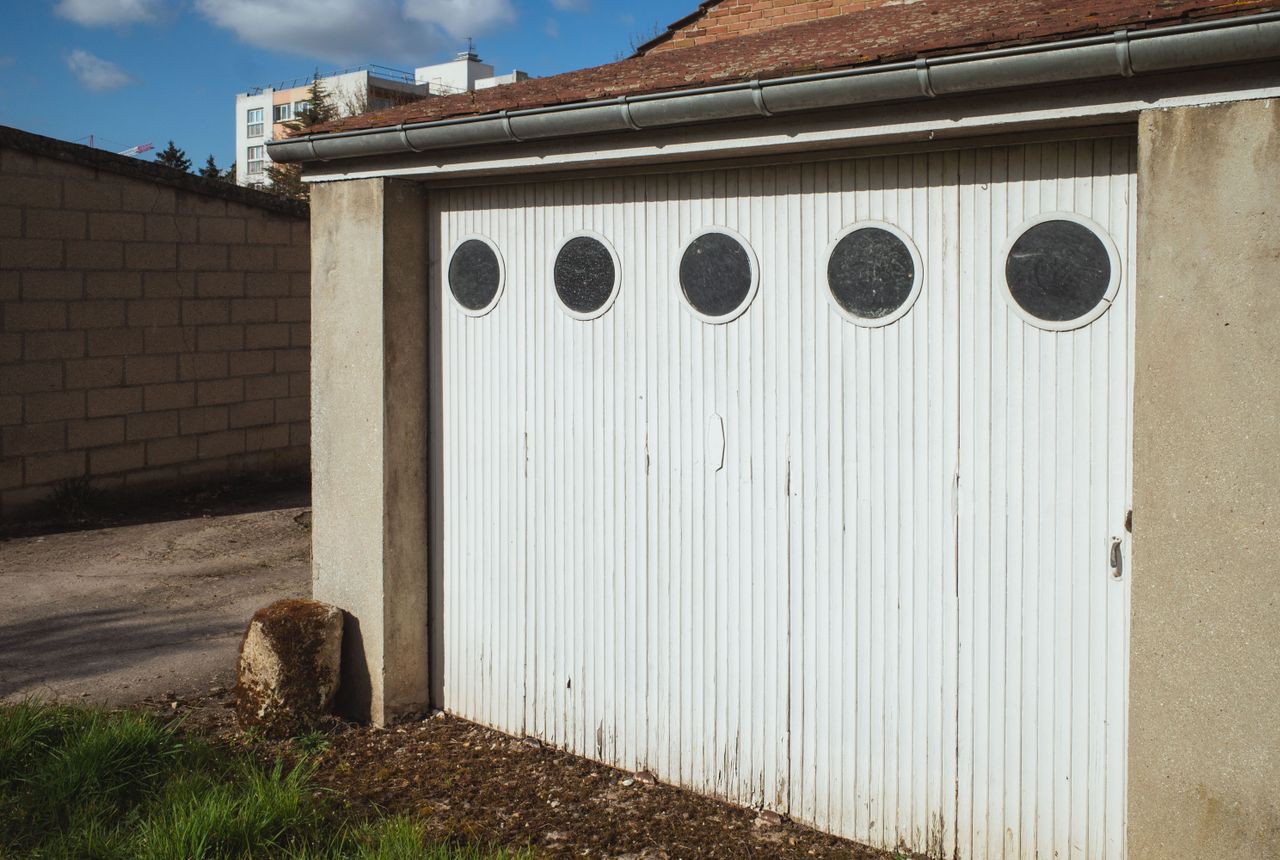
A lot of the double-wide doors on these blocks went up when the house did - sometime between 1938 and 1999, with the stock centered around 1972 - long before wind-load bracing on garage doors was a standard add-on. If your 16-foot door is bowing visibly in the middle panel when wind hits it broadside, or if you can see daylight flexing at the top corners near the track, that's not a tighten-a-bolt job. The horizontal strut that keeps a wide door rigid either isn't there or has come loose from the top panel, and reinforcing that yourself means drilling into a panel under load, which is how people lose fingers or drop a door on a car. Same goes if a track bracket has pulled away from the framing - you're not re-anchoring that with the door hanging on its springs. Call it in at that point. What you can do yourself: check that the tracks are plumb, that lag screws into the jamb haven't backed out, and that weatherstripping at the sides hasn't torn away and let wind get a grip under the bottom panel. Those are five-minute checks. A bowed panel or a pulling bracket is not.
Not every gust is a problem. If your garage door is a single 8 or 9-foot opening, it's carrying a fraction of the wind load a 16-foot double door takes, and minor rattling in a strong front is normal - it's not a sign the door is failing. Cosmetic dents from years of use, a slightly noisy roller, a door that shudders a little when a truck passes on the street - none of that needs a same-day call. If the door still opens and closes flush, closes fully, and the track alignment looks straight when you eyeball it end to end, you can wait for a scheduled visit instead of an emergency one. The exception is anything on the wide doors common to the two-car homes built here in the 1960s and 70s - those carry more surface area and more consequence if a strut or bracket lets go mid-storm. For a narrower single door in reasonable shape, a little flex in a gust is just physics, not damage.
This service area covers 59 named neighborhoods and towns, from Corryville less than a mile away to Forestville ten miles out, and across nearly all of them the housing dates from that same 1938-1999 window, with most of it landing in the 1960s and 70s. That matters for wind specifically because door width tracks with house era: older single-car garages have narrow doors that shrug off wind, while the two-car homes built in that mid-century wave carry the wide doors that actually catch a gust. A wide door built to 1960s-70s spec often has a single center strut, if it has one at all, where a modern wide door comes with two or three. We don't add wind-rated bracing kits to every wide door that comes through - for some older tracks, the hardware isn't worth reinforcing and a full replacement track ends up cheaper than retrofitting bracing to a 50-year-old rail. That's a call we make door by door, not a blanket recommendation.
This is a cold-moderate climate band, which means the wind that matters here isn't a hurricane gust - it's the leading edge of a cold front pushing through, hitting a door broadside while the metal track is already stiff and less forgiving from the temperature drop. A door that flexes fine on a mild fall day can bind or pop out of its track guide during that same wind event once the metal has contracted. If your house is one of the roughly 91,321 owner-occupied places in this area built in that pre-2000 window, the door hardware was very likely never upgraded for a wide door pushed sideways - it was sized for the opening, not for wind. Worth checking before the next front comes through: torsion spring tension (a spring under the wrong tension makes a wind-flexed door harder to control), and whether the vertical track is still anchored tight to the framing at every bracket, not just the top and bottom ones.
Width is usually the reason. A 16-foot double door built in the 1960s or 70s catches far more wind than an 8-foot single, and if it only has one center strut instead of two or three, it'll flex more visibly. It's not necessarily failing - but it's worth a look if the flex is new.
Not always. On some older tracks the hardware isn't in good enough shape to make bracing worth the cost, and a full track and door replacement ends up cheaper than retrofitting a 50-year-old rail. We look at the door and track condition before recommending either option.
Not usually, especially on narrower single doors. Rattling and slight movement in a strong gust is normal. What's worth a call is visible bowing in a wide door's middle panel or a track bracket pulling away from the wall framing.
It can. In this climate band, wind often arrives with a cold front, and the metal track is stiffer once temperatures drop. A door that flexes fine on a mild day can bind or jump the track guide when the same wind hits after a temperature drop.
Call now or request a free quote - same-day service on most repairs, upfront written pricing.