Cincinnati, OH · Garage Door Service
A look at what our techs actually check on a Cincinnati service call, from 1960s-70s torsion hardware to cold-weather opener issues.
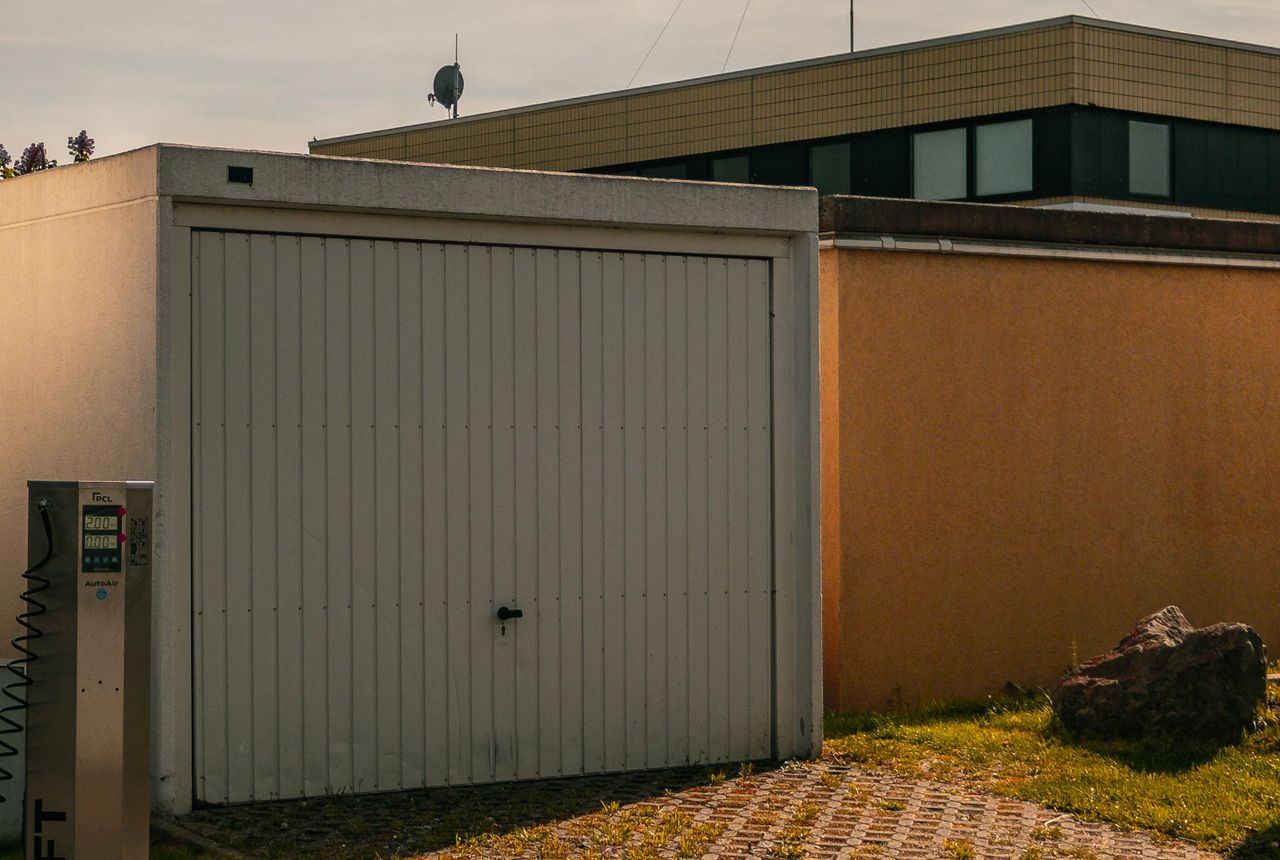
If your door is a torsion-spring setup - and across Cincinnati's 59 named neighborhoods, most homes built between 1938 and 1999 are - a broken spring is not a weekend project. These systems store enough force to snap a ladder or a wrist, and the winding cones on older side-mounted units, common in houses from the 1960s and 70s median era, don't match the parts sold at most hardware stores anymore. Off-track cables, a bent top panel, or a door that drops suddenly when the opener runs also cross the line. So does anything involving the bottom bracket, since that hardware sits under spring tension even with the door closed. What you can handle: lubricating rollers and hinges, tightening loose bolts on the track, swapping a remote battery, and clearing the photo-eye sensors if the door won't close. Those jobs don't involve stored tension and won't hurt anything if you get them slightly wrong. The line we draw for customers is simple - if a part is coiled, wound, or under spring load, that's our call, not yours.
Not every noise means an emergency. A door that's a little noisier in January than July is normal in this climate band - cold, moderate winters tighten steel and dry out old grease, and that alone can turn a quiet door into a squeaky one without any part actually failing. If the door still opens, closes, and reverses on the safety sensor, you can usually wait for a scheduled visit rather than an emergency call. Same goes for cosmetic wear on doors from the 1938-1999 housing stock that make up most of the service area - faded paint, a dented but still-aligned panel, or a slightly stiff manual lock. None of that gets worse overnight. What does deserve a same-week call: a spring that's visibly separated, a cable that's frayed or off the drum, or an opener that grinds but won't lift. Waiting on those doesn't save money - it usually turns a spring replacement into a spring-plus-track repair once the door drops unevenly and stresses the rest of the hardware.
Cincinnati's service area covers a wide mix of housing ages, from close-in neighborhoods like Corryville and Avondale right at the city's edge to areas eight to ten miles out like Blue Ash, Forest Park, and Glendale. With median household construction landing around 1972 and most stock dating 1938 to 1999, a huge share of the doors we see are original torsion setups from an era when track widths, spring winding cones, and drum sizes weren't standardized the way they are now. That means two doors that look identical from the driveway can need completely different replacement springs. At a median household income of $79,195 across roughly 185,236 households, we see a real mix of straight repair jobs and full opener or door replacements - homeowners generally have the budget to choose either path, so we spend part of every call walking through both options rather than assuming one. One limitation worth saying plainly: on some of the oldest torsion hardware, matching parts have long lead times, and sometimes a full spring-and-drum swap is faster and more sensible than hunting down an exact original part.
Cincinnati sits in a cold, moderate climate band, and that shows up in specific ways on a service call. Steel torsion springs lose a bit of tension as temperatures drop, so a spring that was borderline in October can fail outright in a January cold snap - we check spring condition differently depending on season. Nylon rollers and opener gears also get stiffer in cold weather, which is often why a door that ran fine all summer suddenly seems to strain when winter sets in. On the older doors common across this service area's 1938-1999 housing stock, wood jambs and steel tracks expand and contract at different rates through seasonal swings, which loosens track bolts over years of freeze-thaw cycling. Part of a standard visit is checking track alignment and fastener tightness for that reason, not just because something looks obviously wrong. None of this requires exotic parts or unusual labor - it just means the checklist here weights spring tension and track alignment more heavily than it might in a climate that doesn't see real winter.
If your home falls in the common 1938-1999 range across this service area, and you haven't had a spring replaced, there's a good chance it's original or close to it. A tech can check the winding cone style and drum size on-site to tell you how old the setup likely is and whether parts are still stocked or need to be matched.
Yes. Steel loses a small amount of tension as it gets colder, and in a cold, moderate climate band like Cincinnati's, that can push a spring that was already near the end of its life into failure during a cold stretch. It's not the cold causing damage on its own - it's revealing wear that was already there.
Depends on the hardware. Some older torsion setups use cones and drums that are hard to source quickly, and once you're replacing several parts to fix one, full replacement can come out ahead on both cost and wait time. We'll tell you which way a given door leans rather than defaulting to either answer.
Call now or request a free quote - same-day service on most repairs, upfront written pricing.