Cincinnati, OH · Garage Door Service
Norwood's housing dates to about 1938, decades ahead of the service area's 1972 median. That gap changes what breaks and what it takes to fix it. We work Norwood from Cincinnati, 3 miles out.
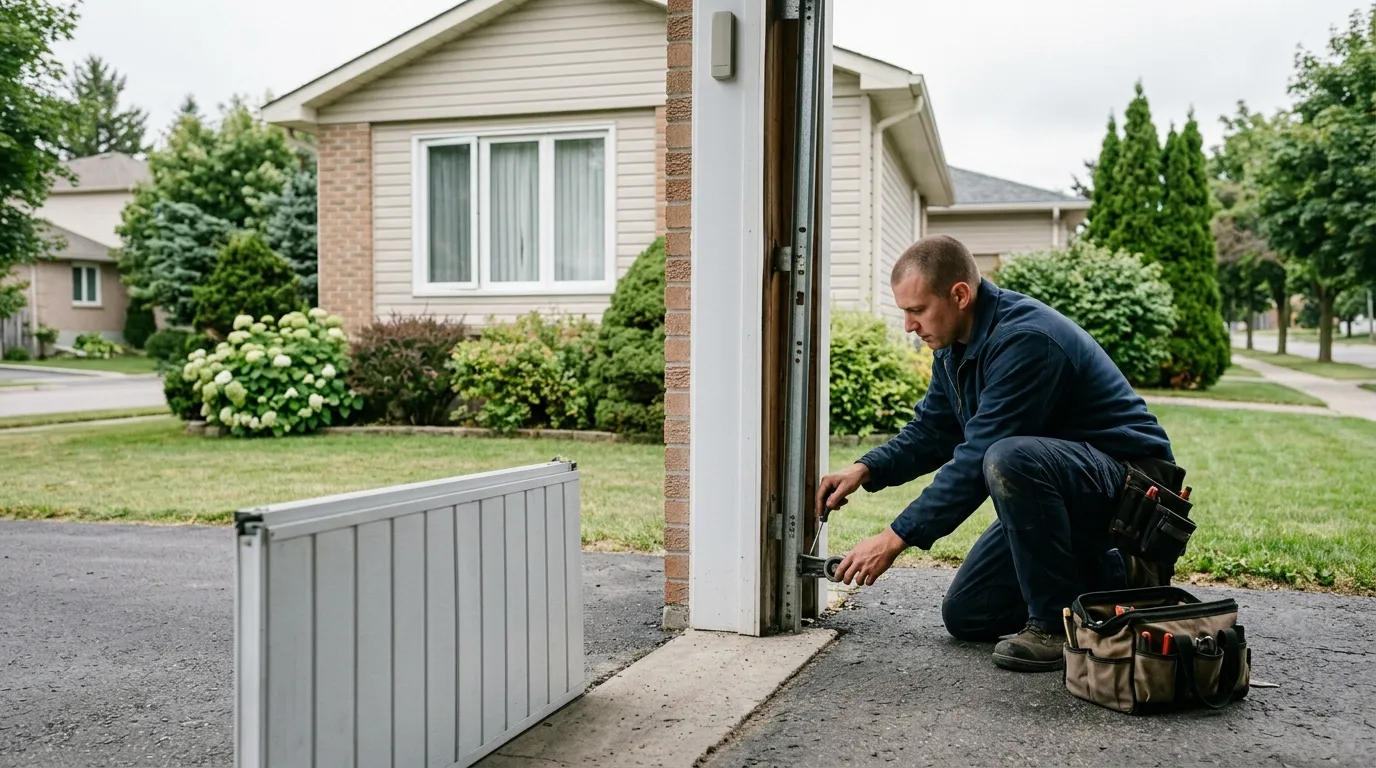
Norwood sits three miles from Cincinnati, which keeps travel time out of the equation for most calls. The bigger factor is what's waiting behind the door once we get there. Norwood's housing stock centers on 1938, well ahead of the wider service area's median build year of 1972, so the openers, track, and spring hardware we find here skew older than what a typical call across the rest of the service area turns up. A stuck door on a 1930s-era garage often means a bent track that's been re-shimmed more than once, or a spring that was swapped out on a mismatched replacement decades back. We diagnose on site before quoting anything, because on a house this age the visible problem - a door that won't budge - is rarely the only thing wrong. If a part isn't something we carry on the truck, we say so up front rather than promise a same-visit fix we can't back up.
A lot of Norwood's garages predate the torsion-spring standard that took over newer construction, so we still run into extension springs riding on side-mounted pulleys with open coils - the kind that need a cage or a safety cable if one isn't already there. On a door this old, the track itself is often the weak point: decades of settling can rack it out of plumb, so a roller replacement alone won't hold. We check plumb and level before we touch springs or cables, because tensioning a spring against a track that's already out of true just moves the failure point somewhere else. Panel sections on doors from this era are sometimes non-standard widths, which matters if only one panel is damaged and the rest of the door is sound - matching it can take longer than the repair itself. We'll tell you straight if a part needs to be special-ordered rather than pulled off the truck that day.
The service area sits in a cold moderate climate band, and that matters more on an older door than a newer one. Steel track and hardware installed in the 1930s and 40s have gone through roughly ninety winters of contraction and expansion, and the fasteners loosen at a different rate than anything installed in the last twenty years. On a lot of Norwood houses, the garage was added or rebuilt sometime after the original construction, which means the door opening itself may not match the door hanging in it - a mismatch that shows up as binding or uneven wear on one side of the track. None of this is unique to any one house, but it's common enough across Norwood's older stock that we check for it by default rather than as an afterthought.
The honest limitation: on doors this old, we can't always match a damaged panel exactly. Manufacturers changed panel profiles and hardware spacing more than once since the 1930s, and a section that looks close from the driveway sometimes isn't close enough to seal or track properly. When that happens, the choice is between a full door replacement and living with a visible seam, and we'll lay out both rather than push one. Wiring for openers is another spot where older Norwood garages differ - houses built before openers were standard often have thin or ungrounded circuits in the garage, which isn't a garage door problem exactly but will stop an opener install cold until an electrician's been out. We don't do electrical work ourselves, so if that's what's needed, we'll tell you plainly instead of working around it.
At a median household income of $64,724 - noticeably below the $79,195 median across the wider service area - most of the calls we get in Norwood are for a repair, not a replacement: a broken spring, a bent track, a cable that's jumped its drum. Those jobs cost less than swapping the whole door, and on a house where the opening itself is original to construction, repair is usually the right call anyway, since a stock replacement door may not fit the frame without extra work. We price the job after we've looked at what's actually broken, not off a phone description, because on hardware this old the difference between a $40 part and a $400 part often isn't visible from outside the garage.
Sometimes, but not always. Standard springs, cables, and rollers are usually on hand. Panel sections and non-standard track hardware from older Norwood construction sometimes need to be special-ordered, and we'll tell you that before starting the job rather than after.
Often yes, especially if the opening is original to the house. A stock replacement door doesn't always fit an older frame without extra work, so repairing the spring, track, or cable is usually cheaper and keeps the fit you already have.
Steel track contracts in cold weather, and on older hardware the fasteners have already loosened over decades of that cycle. One side binding more than the other usually means the track has racked slightly out of plumb, which we check for before touching the spring.
No. If your garage's wiring predates opener installations and isn't grounded properly, that's electrician work. We'll flag it during the estimate so you know before we start, rather than mid-job.
Call now or request a free quote - same-day service on most repairs, upfront written pricing.