Cincinnati, OH · Garage Door Service
Norwood's commercial buildings date to a median year of 1938, decades older than most of the Cincinnati service area. We work on the steel bay doors and hardware that come with that age.
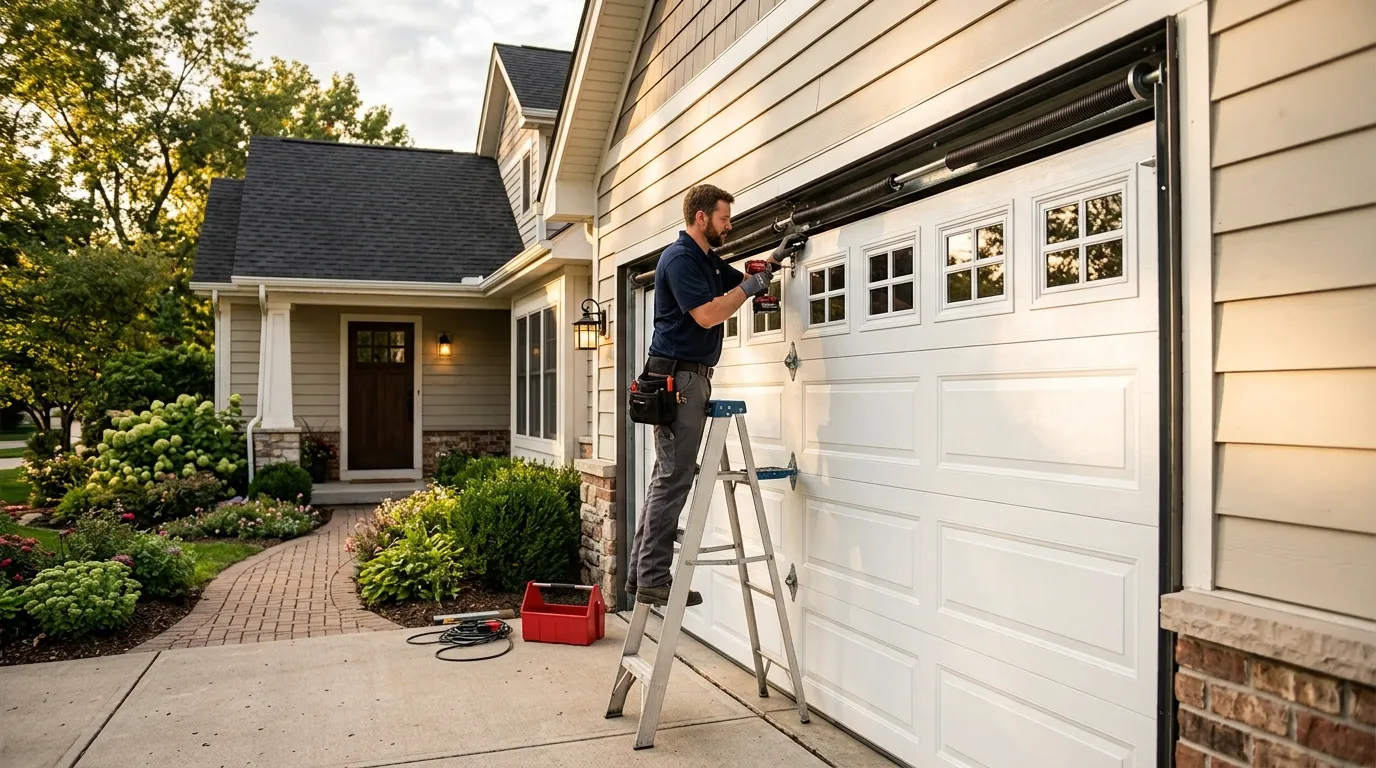
We run this job from Cincinnati, about 3 miles out, so there's no branch sitting in Norwood and no response-time promise to make here. What actually decides how long a commercial bay is down is the door itself. Norwood's commercial stock sits in buildings with a median year built of 1938, well ahead of the 1972 median across the wider service area, and those older steel sectional doors were often built to openings and track spacing that current stock sections don't match off the shelf.
If your door still runs on the original steel track and drum system, a snapped cable or a bent track panel can mean we're sourcing a part rather than grabbing one off the truck. That adds a call to a supplier, not a guess on our part. A newer commercial door on standard track, by contrast, is usually a same-visit fix once we're on site. The honest answer is that the age of the door drives the timeline more than anything else, and on a building this old that's worth planning around before the door fails, not after.
A commercial bay door built to 1938-era openings usually runs heavier gauge steel than a residential door, and on Norwood's older buildings that often means torsion springs sized for a lot more cycles per day than a house door ever sees. When one of those springs goes, we're not swapping a light-duty coil - we're matching wind and wire size to a door that may be original to the building.
Track alignment is the other half of the job. On older masonry openings, the jambs have usually settled over eight decades, which throws the vertical track out of plumb even when the door panel itself is fine. We square the track to the opening as it sits today, not to the blueprint. On a cold-band climate like this one, we also check weatherstripping and bottom seal, since a gap that wouldn't matter in a mild winter matters here when the bay opens and closes all day. We don't replace hardware that's still doing its job just because it's old - if the drum and shaft are sound, we service them.
Norwood's commercial buildings are older than most of what we see across the rest of the service area - a median year built of 1938 against a wider-area median of 1972. That gap matters for one reason: the hardware and door specs from that era weren't standardized the way modern sectional doors are, so a track bracket or drum that's original to the building often isn't a stock part anymore.
High-cycle use adds to it. A commercial bay door on a working building in Norwood might open and close dozens of times a day, and springs and rollers rated for that pace wear faster than anything in a house. Combine decades-old steel with heavy daily cycling and you get failures that show up as a stuck door on a Tuesday morning with no warning the week before. It's not bad luck - it's the math of an old door doing new-door work.
The building itself is usually the first complication. Masonry openings from 1938 were framed to whatever the original tenant needed, and that means bay widths and header heights that don't always match a standard commercial door size today. We measure before we quote, because guessing on an opening this old is how you end up special-ordering twice.
Narrow drive lanes and tight loading areas are common on older Norwood commercial lots, which limits how a spring can be safely wound or how a panel can be pulled for replacement. We plan the job around the space we actually have, not the space a newer facility would give us.
Parts lead time is the honest limitation here. If a door needs a section or a track component that isn't a current stock size, we can usually source it, but it isn't a same-day part. On a working building, that's a real cost - a bay you can't use is lost dock time, not just an inconvenience - so we tell you the lead time before you commit to the repair, not after.
We don't have a set price to quote in general terms, because a torsion spring swap on a standard commercial door and a track rebuild on an original 1938 opening are two different jobs with two different bills. What we can tell you is what drives the number: door age and part availability first, opening size second, and how much of the original hardware is salvageable third.
Norwood's median household income sits at $64,724, noticeably below the $79,195 median across the broader service area, and that's worth naming because it's a fair question to ask before any commercial repair - whether it makes more sense to fix the door in front of you or replace it. On a door this old, sometimes patching a track or swapping a spring is the right call for years more service. Other times the opener, track, and panel are all near the end together, and repairing piece by piece costs more over a year than one clean replacement would. We'll tell you which situation you're in before we start, not after the invoice.
No. We run this service from Cincinnati, about 3 miles away, and travel out to Norwood for the job. There's no local branch here, so we don't quote a guaranteed response time for this suburb - we tell you honestly what the day looks like when you call.
Norwood's commercial buildings run to a median year built of 1938, much older than the 1972 median across the rest of the service area. Track brackets, drums, and spring sizes from that era weren't standardized the way modern doors are, so original parts sometimes have to be sourced rather than grabbed off a shelf.
It depends on what's left of the original hardware. If the track and drum are sound, a spring or cable repair can add years of service. If the opener, track, and panel are all failing near the same time, repairing each piece separately usually costs more over a year than one replacement. We'll tell you which applies to your door before quoting.
More often than you'd expect for the door's age, mainly because these buildings see high cycle counts - doors opening and closing many times a day for years. Combined with hardware original to a 1938-era building, that heavy use wears springs and rollers faster than a typical residential door ever experiences.
This area sits in a cold-moderate climate band, so weatherstripping and bottom seals matter more here than in a mild climate, especially on a door that's opened all day. A worn seal that wouldn't be noticeable in summer becomes a real draft problem once winter sets in.
Call now or request a free quote - same-day service on most repairs, upfront written pricing.