Cincinnati, OH · Garage Door Service
Finineytown homes date to 1958 on average, older than the wider Cincinnati service area. Here's what that means for spring, track, and opener upkeep.
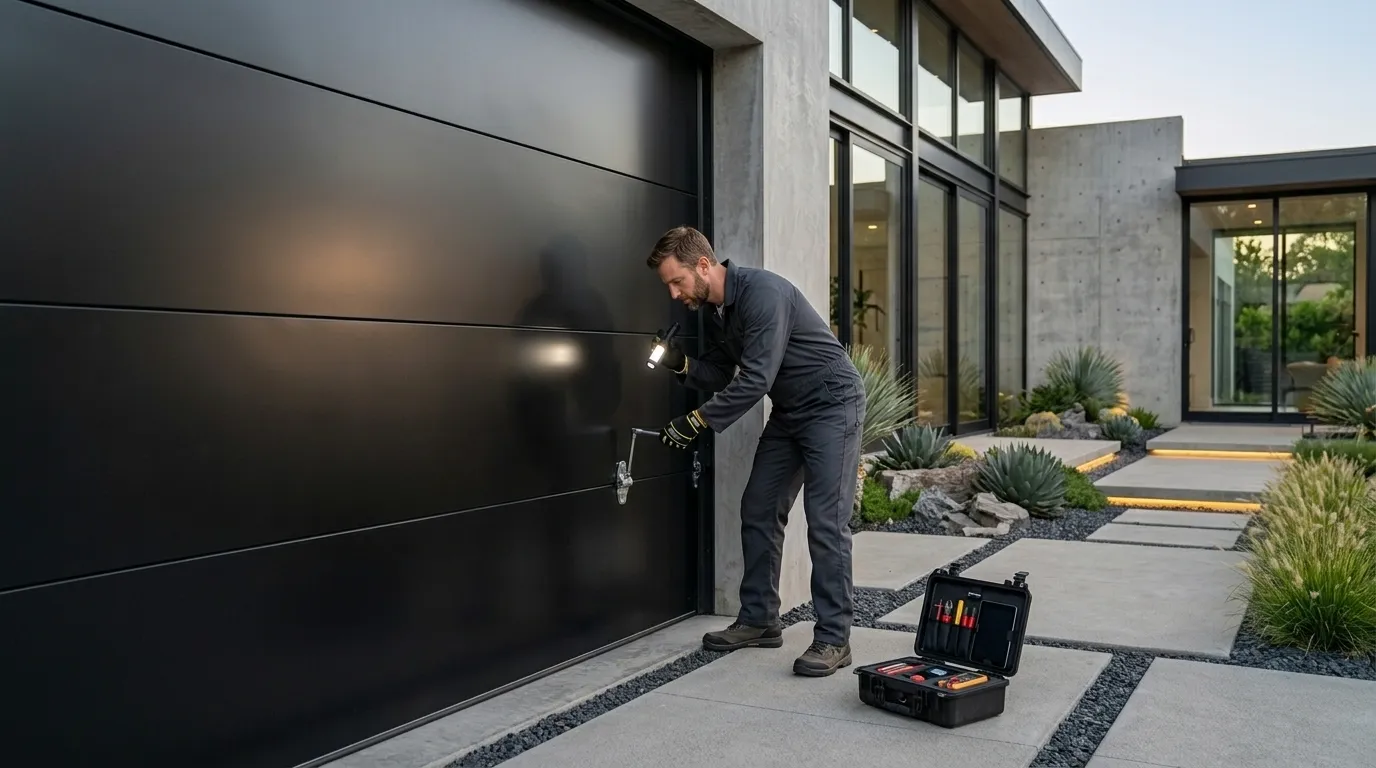
Maintenance pricing here isn't a flat number we can quote sight unseen, and we won't pretend otherwise. What we can tell you is what drives the cost: the age of the hardware. Finineytown's housing stock centers on 1958, well ahead of the 1972 median across the broader Cincinnati service area we cover. A tune-up on a door that old usually means checking components that newer builds don't have - older track brackets, older cable routing, sometimes an extension spring setup instead of the torsion systems that became standard later. None of that is expensive to service on its own, but it takes an extra ten minutes of looking before we touch anything, because the parts layout isn't what you'd find on a house built in the 1980s or 90s. If a part is worn past adjustment and needs replacing, that changes the number - we'll tell you before we do it, not after.
A standard maintenance visit covers the moving parts that wear from cycling, not from age alone: rollers, hinges, the spring system, cables, and the track alignment. On a door installed around 1958, or replaced once or twice since, we're also checking whether the track was ever shimmed to correct for a settling foundation - common in houses this age - and whether the opener, if one was added later, was mounted to hardware that predates it. Lubrication matters more here too. This area sits in a cold, moderate climate band, and metal parts that go through a real winter need different grease than parts in a mild-climate house; the wrong lubricant gums up in cold weather and does more harm than skipping it. We also check balance - a door that's out of balance puts extra load on the opener motor every single cycle, and that's the failure we're usually called back for six months later if it's missed the first time.
Lubricating hinges and rollers, wiping down tracks, and testing the auto-reverse safety feature are all things a homeowner can do without a tech. Spring tension is not one of them. A torsion spring under load can put someone in the hospital, and on hardware from this era, the spring may be an older style that isn't rated the same way current stock is - meaning even the online guides written for modern doors don't quite apply. If your door is noisy, slow, or looks slightly crooked when it's halfway up, that's a balance or alignment issue, not a lubrication issue, and it's worth a call rather than a guess. We'd rather tell you it's a five-minute fix over the phone than bill you for one.
The complication we run into most in Finineytown is mismatched generations of hardware on the same door - a 1958 frame, a spring replaced sometime in the 80s, and an opener bolted on more recently, each rated for slightly different loads. When these don't match, the door works but wears unevenly, and the wear shows up as noise or drift before it shows up as a full failure. We also see original wood jambs on houses this age that have shrunk or shifted slightly over sixty-plus years, which throws off the track alignment even when every individual part is fine. There's a limit to what maintenance alone fixes: if the jamb itself has moved, we can adjust the track to compensate, but a door that keeps drifting out of alignment every few months is telling you the fix is carpentry, not garage door service.
A routine maintenance visit doesn't take your door out of service - you're working around us for the appointment, not living without a garage for days. If the visit turns up a part that needs replacing rather than adjusting, most common parts are stocked on the truck and go in the same visit. The exception is anything specific to older hardware, like a legacy spring size or an obsolete track bracket, which sometimes has to be ordered rather than pulled off the shelf. We'll tell you at the door, not after we've already opened things up, if that's the situation.
We run this job from Cincinnati, five miles out to Finineytown, so there's no separate local branch to call - one call covers scheduling either way. If you want to see the other services we run in this area alongside maintenance, that's on our Finineytown page. If you're comparing what maintenance costs and involves across the wider Cincinnati service area rather than just this suburb, that breakdown lives on our Cincinnati maintenance page.
Not necessarily. A door from 1958 can still be sound if the panels haven't rusted through and the frame hasn't shifted badly. What we look for is whether the hardware is safe to keep adjusting versus needing full replacement - a spring or cable is cheap to swap, a warped panel or rotted jamb usually isn't worth chasing with repairs.
This area sits in a cold, moderate climate band, and metal contracts in the cold. Springs and hinges that were quiet in summer can squeak or bind once temperatures drop, especially if the lubricant used was the wrong grade for winter use. A seasonal check before the cold sets in usually catches this.
We don't have a company-wide interval to hand you, but as a general rule, older hardware benefits from more frequent balance checks than newer systems since wear shows up faster on components that have already been in service for decades.
Common wear parts are usually on the truck regardless of age. Where things slow down is hardware specific to older, discontinued sizes - those sometimes need to be ordered rather than fitted the same day, and we'll tell you upfront if that's the case.
Call now or request a free quote - same-day service on most repairs, upfront written pricing.