Cincinnati, OH · Garage Door Service
Finneytown homes mostly went up around 1958, meaning older spring and track hardware. Here's what that means for repair cost, parts, and timeline.
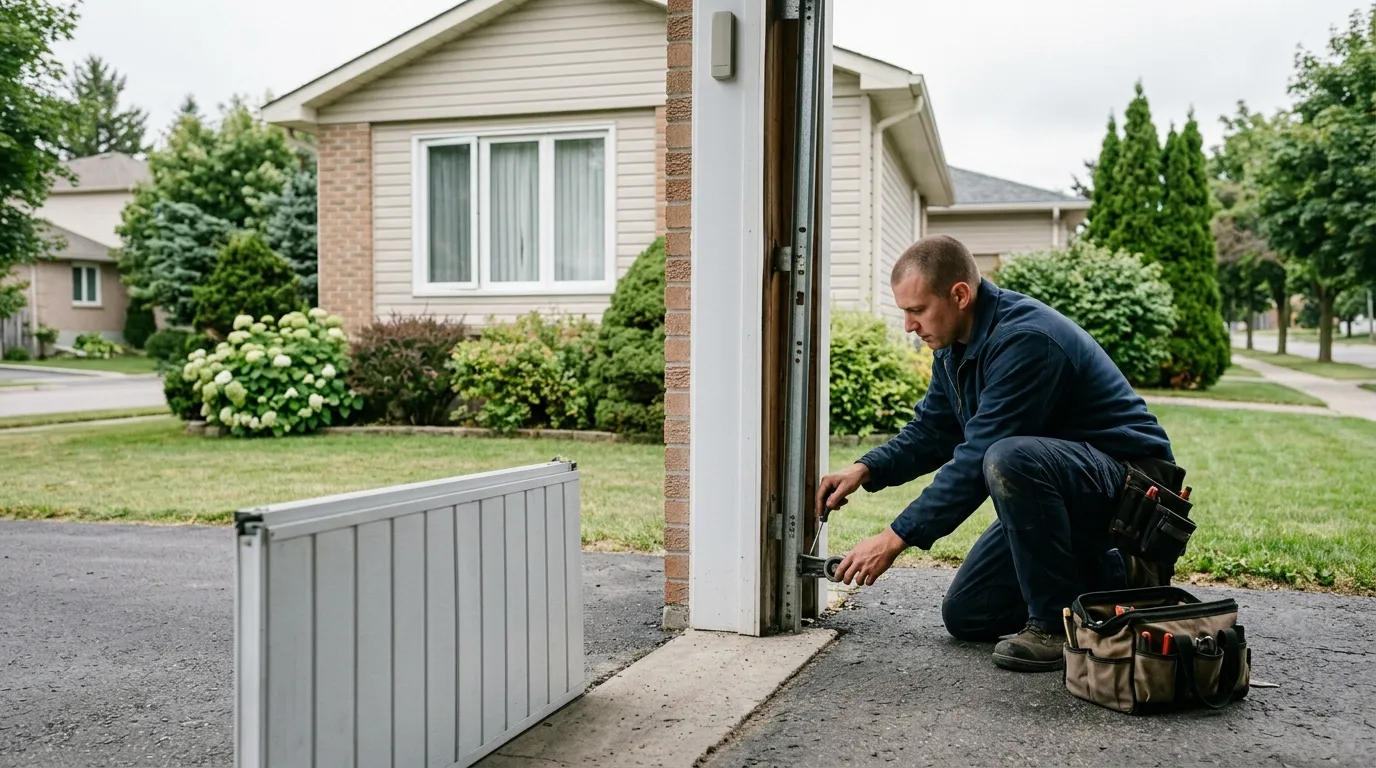
Finneytown's housing stock centers on 1958, which puts most garages here a full generation ahead of the torsion-spring conversions and steel roll-up doors you'd find in newer subdivisions. A lot of these openings still run on hardware that was standard for that build year: single torsion springs sized for lighter wood or early steel doors, and track brackets mounted straight to framing that's had sixty-plus years to shift. That changes what a repair costs, because we're not always swapping a modern part for a modern part - sometimes the fix is adapting a current spring or roller to an opening that was never built to today's spec. A broken cable or a worn roller on a door this age is usually a straightforward job. A cracked spring on original hardware, or a track that's been re-hung once already, takes longer to sort out and costs more in labor than parts. We quote after we see the door, not off a phone description, because two houses built the same year in Finneytown can have completely different hardware depending on who touched the door last.
On a door from this era, the first thing we check is whether the spring, drum, and cable are original-spec or already replaced with something newer. Finneytown's cold-moderate winters put real stress on steel components - expansion and contraction over sixty-plus years works bolts loose and pits springs faster than in a milder climate. If the torsion spring has gone, we measure the shaft and drum before ordering, since older openings sometimes used sizes that aren't the current standard stock length. Rollers on doors this age are frequently steel, not nylon, which means more noise and faster wear, so a roller job here often turns into a full roller-set swap rather than replacing just the one that failed. Track alignment is the other recurring issue: six decades of minor foundation settling means the track brackets on an original frame are rarely still perfectly plumb, and we shim or re-set them as part of the repair rather than just re-securing what's there.
A torsion spring under tension is not a weekend project regardless of the door's age, and that goes double on older hardware where the winding cone and shaft may not match what's in a big-box repair kit. Rollers and hinges are more forgiving - if you're comfortable with a ladder and a socket wrench, swapping worn rollers on a door this age is doable, as long as you release the door from the opener first. Where we tell people to stop is anything involving the spring, the cable, or a bent track section. On a house built around 1958, there's a decent chance the hardware has already been patched once by a previous owner, and untangling what's original versus retrofitted is exactly the kind of thing that goes wrong fast without the right tools.
The complication we run into most in Finneytown is mismatched hardware - a spring or track bracket from a repair done decades ago that doesn't match the rest of the setup, sitting on an opening that was never square to begin with. That's not a Finneytown-specific defect, it's what happens to any 1958-era door after enough owners and enough repairs. We also see openers that have been bolted onto original wood jambs that have since dried and shrunk, so a repair that looks like a simple opener swap sometimes needs added bracing first. Here's the honest limit: if the door itself - the panels, not just the hardware - is original steel or wood from that era, we'll tell you when replacement makes more financial sense than another patch. Chasing rust-through panels or warped wood sections with repair parts usually costs more over a year or two than doing the door once.
Most spring and cable jobs on Finneytown's older hardware wrap up in one visit once we've got the right-sized parts on the truck, which we stock for common torsion and extension setups. Where the timeline stretches is track or bracket work that needs custom fitting to an opening that's shifted over sixty-plus years - that's measured and often ordered before the second visit rather than improvised on the spot. We travel to Finneytown from Cincinnati, about 5 miles out, so scheduling depends on the day's route rather than a fixed local slot.
Call and describe what the door's doing - grinding, off-track, won't budge, opener running but door not moving - and we'll tell you upfront whether it sounds like a same-visit fix or a parts-order situation given the age of the hardware typical to this area. For more on the neighborhood's general garage door work, see our Finneytown page. If you're comparing this against work elsewhere in the metro, the Cincinnati repair page covers the wider service area.
Most houses in Finneytown went up around 1958, and doors and openers from that era used spring and track sizes that have since been superseded. Depending on whether a previous owner replaced parts, your hardware could be original-spec, a mid-generation swap, or fully modern - which is why we inspect before quoting.
Depends on what's failing. Springs, cables, and rollers are almost always worth fixing. If the panels themselves are rusted through or the wood has warped, we'll usually tell you replacement costs less over time than another round of patches.
No. We're based in Cincinnati and drive out to Finneytown, about 5 miles away, for each job. There's no local depot, so scheduling runs through our Cincinnati dispatch.
Most torsion or extension spring jobs on Finneytown's older hardware finish in a single visit since we carry common sizes on the truck. If the track or bracket needs custom fitting to a shifted frame, that can take an extra visit to source the right part.
Call now or request a free quote - same-day service on most repairs, upfront written pricing.